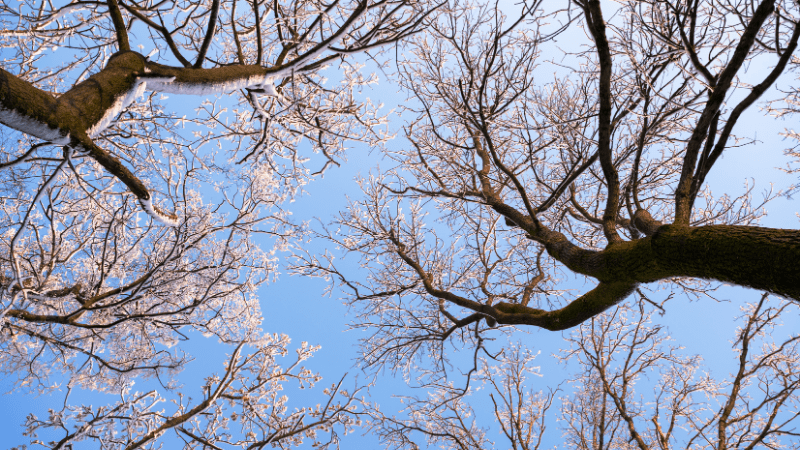
Winter Tree Indentification
Winter Tree Identification: Tips for Spotting Species Without Leaves
When the vibrant golds of autumn fade and the last leaves settle on the frost-covered ground, many homeowners assume their trees have gone “incognito” for the season. To the untrained eye, a winter landscape can look like a collection of anonymous grey skeletons.
However, as arborists, we see winter as the best time to truly get to know your trees. Without the “cloak” of foliage, the structural integrity, health, and unique personality of each species are laid bare. Identifying your trees in the winter isn’t just a fun weekend hobby; it’s essential for proactive care, structural pruning, and planning your spring landscape.
Here is our professional guide to reading the “bones” of your trees this winter.
The Arborist’s Guide to Winter Identification
When leaves are absent, we look for “The Big Four” features: Bark, Buds, Fruit, and Silhouette.
Bark: The Tree’s Fingerprint
Bark is often the most reliable way to identify a mature tree. In the winter, textures and colors become much more prominent.
- Smooth: Species like Beech or Young Maples have skin-to-skin smoothness.
- Peeling/Exfoliating: If the bark is papery or shedding in layers, you’re likely looking at a Paper Birch or a River Birch.
- Furrowed: Deep ridges and “valleys” are characteristic of Oak or Cottonwood.
- Platy: If the bark looks like burnt cornflakes or overlapping plates, it’s a hallmark of the Black Cherry or Ponderosa Pine.
Branch Structure and Bud Shape
Look up! The way a tree holds its “arms” tells a story.
- Opposite vs. Alternate: Most trees have alternate branching (staggered). However, we use the acronym MAD Buck to remember the exceptions: Maple, Ash, Dogwood, and Ohio Buckeye. These species have branches and buds that grow directly across from one another.
- Buds: Get close. Beech trees have long, cigar-shaped buds. Oaks have clusters of buds at the very tip of the twig. Willow buds hug the stem tightly.
Persistent Fruit, Cones, and Seeds
Nature often leaves clues hanging behind.
- Samaras: Those “helicopter” seeds often get stuck in the crooks of Maple or Ash branches.
- Cones: Different evergreens have distinct cones; long and cylindrical for Spruce, small and rounded for Hemlock.
- Pods: If you see long, dark bean-like pods, you are likely looking at a Honey Locust or a Catalpa.
The Silhouette (Growth Habit)
Step back and look at the tree’s overall shape against the winter sky.
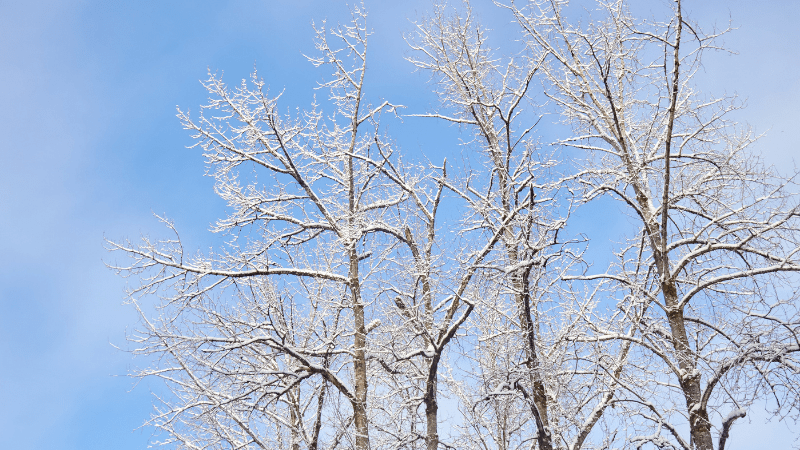
- Vase-shaped: The classic, elegant spread of the American Elm.
- Pyramidal: The sharp, triangular shape of Pin Oaks or many conifers.
- Weeping: The drooping, graceful lines of a Weeping Willow or Nootka Cypress.

Professional Tools & Tips
You don’t need a degree in forestry to ID like a pro. Here are three things we recommend keeping in your pocket:
- A Hand Lens: A small 10x magnifying glass helps you see the intricate details of bud scales and leaf scars.
- Smartphone Photos: Take three shots: one of the whole tree, one of the bark, and a close-up of a twig. This makes it easy to compare with guides later.
- Reference Guides: Apps like PictureThis or iNaturalist are great starting points, but a regional “Winter Tree Finder” pocket book is a staple for any serious tree enthusiast.
Local Species Spotlight
In our neck of the woods, keep an eye out for these common neighbors:
- The Trembling Aspen: Identified by its greenish-white bark (that doesn’t peel like Birch) and small, sharp black buds.
- The Bur Oak: Recognizable by its “rugged” look—thick, corky bark and gnarly, twisting branches that look like they belong in a gothic novel.
- The Manitoba Maple: Often shows off clusters of persistent winged seeds that rattle in the winter wind.
Get Exploring!
Winter is far from a “dead” season; it is a period of quiet architectural beauty. Understanding what species you have on your property is the first step in ensuring they thrive for decades to come.
We want to see what you’re finding! Next time you’re out for a winter stroll, snap a photo of a unique bark pattern or a striking silhouette and tag us on social media.
If you discover a tree that looks a bit worse for wear—perhaps with cracked bark or broken limbs—don’t wait for spring. Contact a Green Drop ISA-Certified Arborist today for a winter structural assessment. We’re here to help your trees stay strong, all season long.
FAQs
Are your arborists local to each service area?
What are the costs of regular tree health care?
What areas does Green Drop provide emergency tree services?
What does your DED management program involve?
What services do you offer?
Explore Our Latest Insights


5 Signs Your Tree Is in Trouble (And What to Do About It)