Tree Care
5 Min Read

Why Mulching in Fall Can Save Your Trees Next Spring

Published on 07 Nov 2025
Why Mulching in Fall Can Save Your Trees Next Spring

Why Mulching in Fall Can Save Your Trees Next Spring

As your trusted ISA-Certified Arborists, we know that successful tree care isn’t just about the growing season—it’s about preparation. The transition from fall to winter is a critical time for trees, and the single best action you can take to protect their long-term health is the strategic application of mulch.

This simple, preventative measure is an essential insurance policy. It guarantees that the vital structures of your trees are secured against the extreme conditions of winter, setting the stage for robust health and vigorous growth once spring arrives

The Power of Stable Root Temperatures

When temperatures drop, the ground freezes, and your tree’s root system comes under significant stress. A proper layer of organic mulch acts as a crucial thermal buffer.

Mulch acts as insulation, keeping soil temperatures stable and roots protected from extreme cold.

This insulating layer shields the shallow feeder roots from rapid and deep freezing. By moderating the temperature, mulch minimizes stress and damage to the fine root hairs responsible for absorbing water and nutrients. This stability is key to ensuring your tree’s internal processes remain viable throughout its dormant period, leading to a much stronger spring rebound.

Defense Against Drought and Freeze-Thaw Damage

Winter brings two often-overlooked threats to tree health: desiccation (drying out) and root heaving. Mulching addresses both, providing a comprehensive defense for your tree’s foundation.

Helps retain moisture from fall watering and reduces freeze-thaw damage.
  • Moisture Retention: After a thorough final fall watering, mulch seals that moisture into the soil. In our often dry and windy winters, trees can lose significant moisture through their bark and evergreen needles. The reserved water under the mulch is a critical reservoir that helps the tree survive the frozen months and avoid winter desiccation.
  • Freeze-Thaw Protection: When temperatures fluctuate, the soil expands and contracts (the freeze-thaw cycle). This action can physically push, or heave, smaller trees and shrubs right out of the ground, shearing delicate root systems in the process. By keeping the soil temperature consistent, mulch greatly reduces the severity of these cycles, keeping the roots safely anchored.

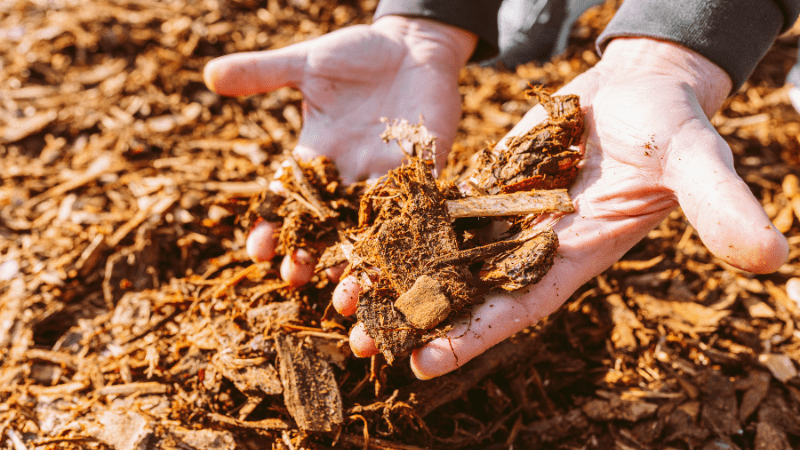
Organic mulch consists of wood chips, shredded bark or compost

The Arborist’s Guide to Proper Application

To ensure you reap the benefits without causing harm, the application method is crucial. As professional arborists, we often see issues caused by improper mulching.

Use organic mulch (like wood chips) in a 2–3 inch layer, keeping it away from the trunk.

  1. Choose Organic Material: We recommend using organic materials like wood chips, shredded bark, or compost. These materials decompose slowly, enriching the soil as they insulate. Avoid non-organic materials like plastic sheets, which can block oxygen exchange.
  2. Maintain the Right Depth: Apply a uniform layer that is 2 to 3 inches deep over the entire root zone. Avoid applying more than four inches, as excessive mulch can smother roots and prevent essential gas exchange.
  3. The “Mulch Donut” Technique: This is the most critical instruction: Do not pile mulch against the trunk! Mulch that touches the bark traps moisture, leading to disease, pest infestation, and bark decay. Instead, create a “mulch donut” by leaving a 1-to-2-inch gap of clear soil right around the base of the tree.

By following these simple guidelines, you give your trees the greatest chance to thrive through the winter and ensure a beautiful, healthy landscape next spring.

For assistance with preparing your trees and shrubs for the winter, contact a Green Drop Trees arborist in your area. 

“They did an amazing job leaving no mess.”

J. Smith, Edmonton

“He was friendly, courteous, and answered all my questions.”

Nick S, Edmonton

“Great service! They got it all done even though the tree needed a lot of work. Thanks again!”

Robert W, Edmonton

FAQs

Find answers to common questions about our tree care services and pricing packages.

Are your arborists local to each service area?

What are the costs of regular tree health care?

What areas does Green Drop provide emergency tree services?

What does your DED management program involve?

What services do you offer?

Still have questions?

Discover expert tips for maintaining healthy trees.