How to Care for Your Trees in the Intense Summer Heat
Summer in our part of the world is a welcome reprieve from the frigid temperatures...
READ MORE
Say hello to beautiful trees. Tell us your location to get the best tree care services for your area!

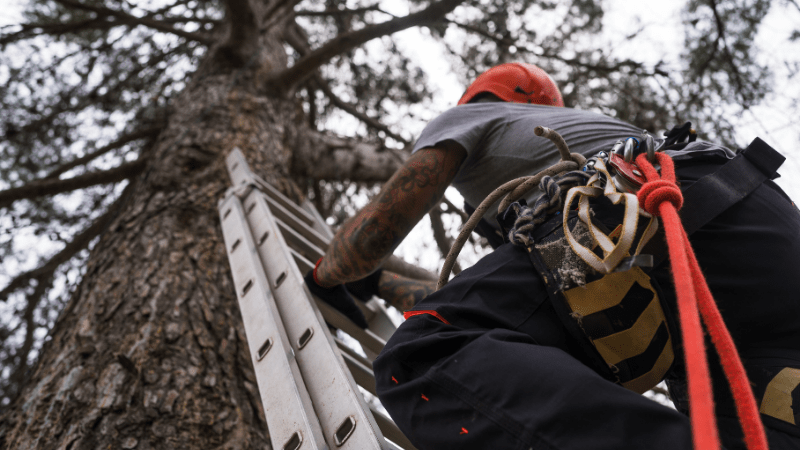
When the summer heat settles across Western Canada, our yards become vibrant sanctuaries. We spend our weekends hosting barbecues, enjoying the shade, and admiring the lush, green canopies that frame our properties. But while mid-summer is the perfect time to enjoy your outdoor space, it’s also the absolute most critical time of year to take a closer look at your trees.
To the untrained eye, a tree in July might look perfectly healthy just because it’s full of leaves. However, as certified arborists, we know that summer is when trees experience some of their highest environmental stress.
A professional tree inspection during the peak of the season is your best line of defense against hidden structural failures, pest infestations, and costly property damage. Here is why scheduling an assessment right now matters more than you might think.
Trees are dynamic living organisms, and when they are struggling, they don’t always give loud warning signs. Subtle indicators—like early leaf drop, minor crown thinning, or fine boring holes in the bark—can easily go unnoticed by homeowners.
By the time a tree shows massive patches of brown leaves or dieback, a disease or pest infestation has likely been hollowed out or deeply established. Booking a comprehensive tree inspection in mid-summer allows an ISA Certified Arborist to catch these minor stressors early. Early intervention is the difference between a simple, budget-friendly targeted treatment and an incredibly expensive, emergency tree removal later down the road.
During the spring, trees put on an immense amount of new growth. By mid-summer, branches are at their absolute heaviest, weighed down by dense foliage and, in many cases, developing fruit or seed crops.
This heavy load puts maximum mechanical stress on the tree’s structure. Structural defects that were invisible in the winter or early spring—such as co-dominant stems (V-shaped crotches), internal decay, or tight inclusions—begin to buckle under the weight.
Furthermore, mid-summer often brings sudden, violent prairie thunderstorms filled with high winds and heavy rain. A professional arborist assessment will identify weak limbs and structural hazards before the next big storm hits, allowing us to perform structural pruning or cabling to stabilize your canopy.
If your property received deep-root fertilizations, micro-injections, or pest management applications earlier this spring for issues like aphids, scale, or fungal diseases, mid-summer is the evaluation phase.
Treatments aren’t just a “set it and forget it” solution. A summer tree inspection allows us to monitor your tree’s physiological response to those spring treatments. We can evaluate:
This follow-up ensures your investment in plant health care is actually delivering results and allows us to tweak our approach before the tree goes dormant for the winter.
As a property owner, you have a legal duty of care to maintain the safety of your landscape. If a visibly compromised or dead branch breaks during a summer storm and damages your neighbor’s roof, a vehicle, or worse, injures someone, you could be held liable.
Insurance companies frequently investigate whether property damage was an unpredictable “act of God” or the result of owner neglect. Having a documented, professional tree inspection report on file proves that you are proactively managing your property’s risks. If an arborist identifies a hazard, you can address it immediately, protecting your loved ones, your neighbors, and your financial liability.
It’s easy to find DIY tree care tips online, but nothing replaces the trained eye of an ISA Certified Arborist. Trees are complex systems, and diagnosing them requires years of training in tree biology, biomechanics, and regional pest pressures.
When you invest in a certified arborist assessment, you aren’t just hiring someone to look at your trees; you are getting a comprehensive diagnosis. We inspect the tree from the root flare all the way to the highest tips of the canopy. We understand the specific soil conditions, local climate patterns, and urban stressors unique to our region. You receive actionable, honest advice tailored to keep your urban forest safe, beautiful, and thriving for generations to come.
Schedule Your Summer Tree Inspection Today
Don’t wait for a broken branch or a failing canopy to disrupt your summer. Keep your yard safe, healthy, and stunning all season long. Contact the team at Green Drop Trees today to book your professional tree inspection with our certified arborists.


