How to Care for Your Trees in the Intense Summer Heat
Summer in our part of the world is a welcome reprieve from the frigid temperatures...
READ MORE
Say hello to beautiful trees. Tell us your location to get the best tree care services for your area!

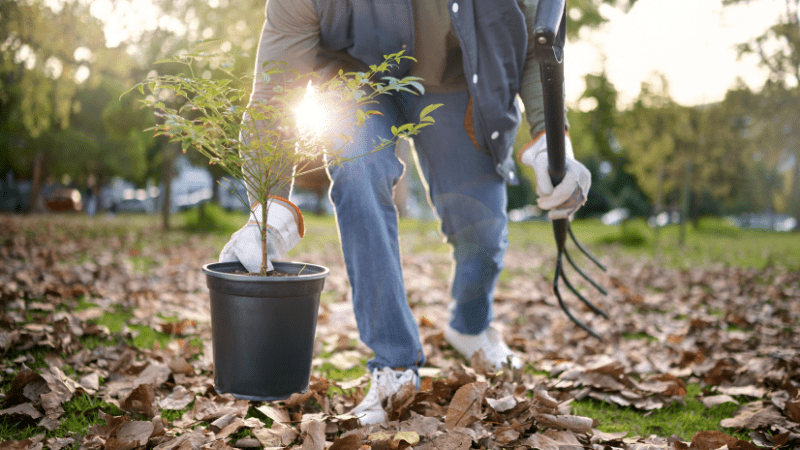
When most homeowners think about landscaping or adding new greenery to their yard, spring is usually the first season that comes to mind. However, ask any certified arborist, and they will let you in on an industry secret: fall is actually the absolute best season for planting trees.
While spring brings a surge of top growth, autumn offers a unique combination of mild air, warm soil, and lower environmental stress that allows young trees to flourish. If you’re looking to add shade, privacy, or long-term value to your property, here is why autumn is the ideal window for planting trees on your landscape.
Moving a tree from a nursery pot or root ball into new soil is an adjustment. When you plant in the spring or summer, young trees have to battle scorching heat and high evaporation rates while trying to expand their roots.
Cooler autumn air creates a far milder environment. During fall, ambient temperatures drop, significantly reducing the moisture lost through leaves (a process known as transpiration). This reduction in environmental stress means the tree doesn’t have to fight for survival against intense heat waves, allowing it to adapt to its new home much more comfortably.
A common misconception is that when the autumn air turns crisp, everything underground freezes up too. In reality, soil acts like a thermal insulator—it holds onto the heat accumulated throughout the summer long after the air temperature begins to drop.
This contrast creates optimal underground conditions for planting trees:
Because the canopy isn’t demanding energy to grow leaves, the tree directs 100% of its nutrients down into building a thick, resilient root network.
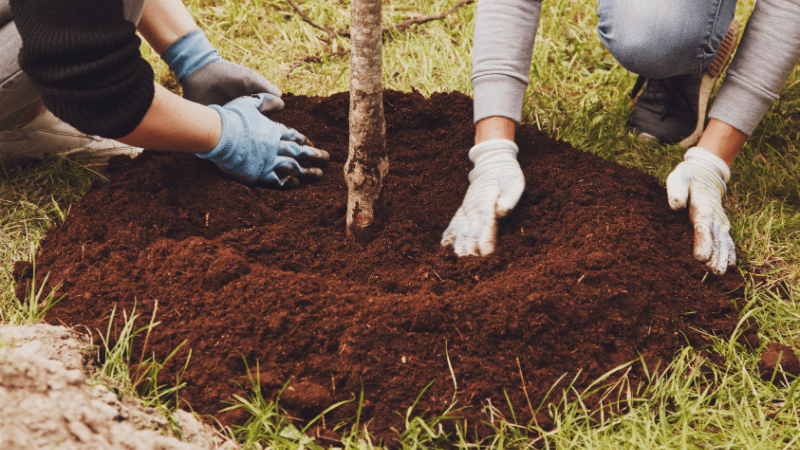
Root growth doesn’t stop just because a tree drops its leaves. In fact, root systems continue to expand actively until the ground officially freezes solid.
By planting trees in early-to-mid autumn, you give them a several-week head start to establish critical fine root hairs. When spring eventually arrives, a fall-planted tree is already anchored, hydrated, and ready to burst into leaf production using its established system—giving it a massive advantage over trees planted during the busy spring rush.
Water management is one of the most critical aspects of tree establishment. During hot July and August afternoons, newly planted trees require frequent, deep waterings to avoid leaf scorch and drought stress.
Fall simplifies irrigation significantly:
While you still need to keep the soil consistently moist until the ground freezes, the overall water demand and risk of desiccation are much lower compared to mid-summer care.

In Western Canada and prairie regions, spring can be wildly unpredictable. A sudden hot streak in May can scorch sensitive foliage, while late blizzards can damage tender new growth. Summer brings short, intense heatwaves that put high demands on saplings.
Autumn in prairie climates offers a far more stable window. The consistent downward trend in temperatures gives new trees a predictable transition into winter dormancy. Once insulated by winter snow, fall-planted trees sleep soundly and awaken early in spring, fully adapted to the local climate conditions.
To get the most out of your autumn landscaping project, follow these simple arborist-approved steps:
Need Help Choosing or Planting Trees This Fall?
Whether you need help selecting the right species for your soil type or want professional installation to guarantee healthy establishment, our team of certified arborists is here to help. Contact Green Drop Trees today for expert tree care, planting services, and professional advice!


