How to Care for Your Trees in the Intense Summer Heat
Summer in our part of the world is a welcome reprieve from the frigid temperatures...
READ MORE
Say hello to beautiful trees. Tell us your location to get the best tree care services for your area!

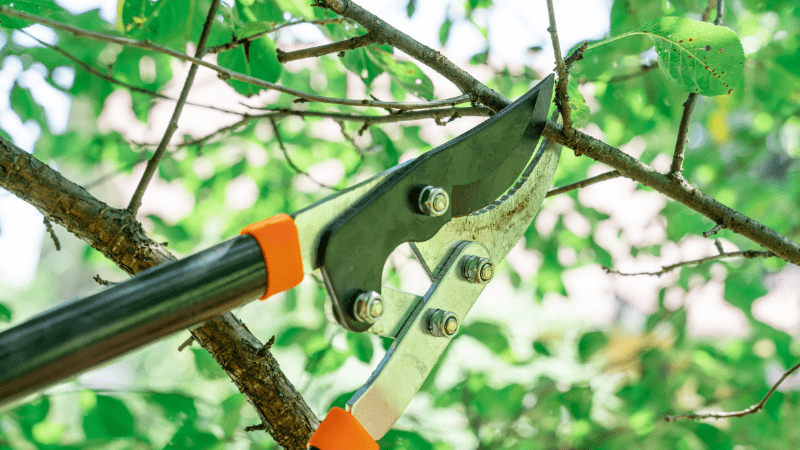
When the sun is shining and your yard is in full bloom, it’s natural to want to head outside, grab your shears, and tidy up your landscape. But as professional arborists, one of the questions we get asked most often during the warm-month stretch is: Is it actually safe to prune in summer?
The short answer is yes—but with some major caveats.
While the dormant winter season is traditionally the safest window for major structural overhauls, summer pruning has a distinct place in a proactive tree care routine. However, doing it wrong during a heatwave can severely stress your trees, invite pests, and compromise their long-term health.
To help you keep your canopy healthy, vibrant, and safe all season long, here is an arborist’s breakdown of what to cut, what to leave alone, and when to wait.
Summer pruning shouldn’t be about reshaping a tree or hacking away at major limbs. Instead, think of warm-weather trimming as tactical maintenance. When the canopy is fully leafed out, it is actually the easiest time to spot specific flaws that are hidden during the winter.
The following practices are perfectly safe—and often recommended—during the summer months:
Taking a minimal, strategic approach to summer trimming offers a few unique advantages that you can’t get during the winter dormancy.
Pruning during the winter actually triggers a massive growth spurt come springtime. Summer pruning does the opposite. Because the tree has already spent its stored energy to produce leaves, removing select leafy branches reduces the tree’s overall food production capacity for the rest of the season. If you have a tree or hedge that is rapidly outgrowing its designated space, light summer pruning is an excellent way to slow its roll and maintain its shape.
With a dense summer canopy, it’s easy to see where foliage is choking itself out. Lightly thinning overcrowded, crossing inner branches opens up the interior of the tree. This allows sunlight to reach the lower, inner leaves and improves air circulation, which drastically cuts down on the humid conditions that fungal diseases thrive in.
Heavy summer storms and high winds can put massive leverage on compromised branches. Safely removing a cracked or weakened limb in July can save you from a costly property emergency in August.
There is a very fine line between a helpful trim and a damaging hack job, especially when temperatures soar. Over-pruning when you choose to prune in summer can backfire spectacularly due to a tree’s physiological response to heat.
As a rule of thumb, certain tree species should come with a strict “Do Not Disturb” sign during the hot, dry stretches of the year. For these species, summer pruning opens the door wide to devastating diseases and pests that are actively hunting for fresh sap.
Elm Trees (Ulmus species)
To protect your landscape against Dutch Elm Disease (DED), pruning elms is strictly restricted across many regions during the spring and summer. The Elm Bark Beetle, which carries the destructive fungus, is highly attracted to fresh pruning cuts. Keep the shears away from your elms until late fall or winter when the beetles are inactive.
Oak Trees (Quercus species)
Similar to elms, oaks are highly vulnerable to Oak Wilt, a lethal fungal disease spread by sap-feeding beetles. These beetles are highly active during warm weather and are drawn instantly to the scent of fresh oak sap. Avoid pruning oaks entirely until the deep freeze of winter sets in.
“Bleeders” (Birch, Maple, Walnut)
While not necessarily a health crisis, species like Maples, Birches, and Walnuts have high sap pressure. If pruned during certain active growth phases in late spring or early summer, they will “bleed” sap profusely. While it looks alarming and can cause messy staining, it’s best to handle major structural cuts on these trees in the late dormant season.
If your tree requires significant structural changes, a major height reduction, or the removal of large, heavy limbs (anything larger than a tennis ball), put the tools away and wait for winter.
The ideal time for major structural pruning is the late dormant season (typically late January through March).
Why wait for the winter freeze?
Knowing how and when to prune in summer is all about balance. Keep your warm-weather pruning limited to removing the “Three Ds” and tackling minor clearance issues, and leave the heavy lifting for the winter.
If you are unsure whether a heavily drooping limb or an overgrown canopy is safe to trim right now, don’t risk the health of your trees. Reach out to a Green Drop certified arborist to evaluate your property and keep your landscape thriving safely all year round.


