How to Care for Your Trees in the Intense Summer Heat
Summer in our part of the world is a welcome reprieve from the frigid temperatures...
READ MORE
Say hello to beautiful trees. Tell us your location to get the best tree care services for your area!

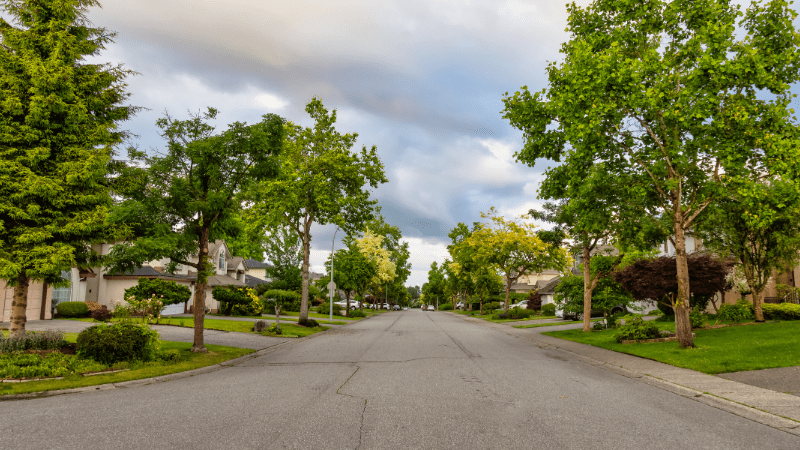
As arborists working across the Canadian Prairies, we often talk about the tree canopy as a “living utility.” Much like the pipes that carry our water or the wires that provide our electricity, the collective cover of leaves and branches above our heads is essential infrastructure.
However, unlike other utilities, the tree canopy is not distributed equally. In cities like Calgary, Edmonton, Winnipeg, and Regina, a bird’s-eye view reveals a stark reality: your postal code often determines how much shade you enjoy and how clean your air is.
At Green Drop, we believe every resident deserves the cooling, health-giving benefits of a robust urban forest. Here is a look at how Prairie municipalities are shifting their focus from simple planting numbers to a more profound goal: tree canopy equity.
If you walk through an established “heritage” neighbourhood in a Prairie city, you’re often greeted by a cathedral of mature American Elms or Green Ash. These trees were planted 70 to 100 years ago, and today, they provide nearly 40% canopy cover in some pockets.
Compare this to newer “cookie-cutter” suburbs or industrial-adjacent residential zones. In these areas, the tree canopy often drops below 10%.
Why the Gap Exists
| Neighbourhood Type | Average Canopy Coverage | Dominant Tree Age | Ecosystem Services Value |
|---|---|---|---|
| Mature/Heritage | 25% – 40% | 60+ Years | High (Cooling, Windbreak) |
| New Subdivisions | 5% – 12% | 0–15 Years | Low (Establishing) |
| Industrial/Core | 2% – 8% | Mixed | Very Low |
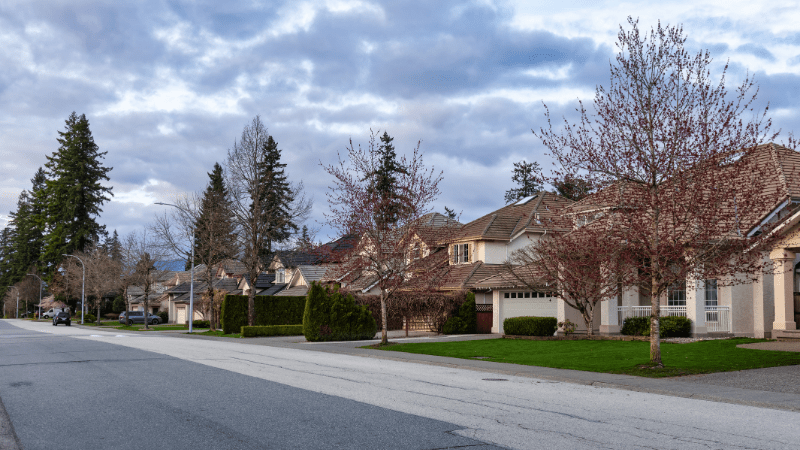
Tree canopy equity isn’t just about aesthetics; it’s a matter of public health. This is where the concept of the “Urban Heat Island” (UHI) effect comes into play. Hard surfaces like asphalt and concrete absorb heat during the day and radiate it back at night.
In Prairie cities, where summer “heat domes” are becoming more frequent, the temperature difference between a tree-lined street and a treeless one can be as much as 10 to 12 degrees Celsius.
Shade Access as a Right
In underserved neighbourhoods, residents often rely more on walking or public transit. Without a sufficient tree canopy, waiting for a bus or walking to the grocery store becomes a health risk during July and August. Furthermore, trees act as giant filters. In areas near major Prairie trucking routes or industrial hubs, a dense canopy can reduce particulate matter in the air, lowering rates of childhood asthma and cardiovascular issues.
How do cities decide where to dig the next hole? The answer lies in GIS (Geographic Information Systems) mapping. Modern Prairie urban forestry departments are now layering data to find “priority planting zones.” By overlaying canopy maps with socio-economic data, heat vulnerability indices, and health statistics, arborists can identify exactly where a new tree will do the most good.
For example, the City of Edmonton’s Urban Forest Management Plan uses these “Equity Maps” to ensure that planting budgets aren’t just spent where the loudest voices are, but where the ecological need is greatest.
As arborists, we look at the “Return on Investment” (ROI) of a tree. When we plant in a “canopy-poor” neighbourhood, the benefits aren’t just additive—they are multiplicative.
Prairie cities cannot close the canopy gap alone. It takes a “whole-of-community” approach. We are seeing an explosion of growth thanks to federal and local initiatives.
The 2 Billion Trees Program
The Canadian federal government’s commitment to plant two billion trees has provided a massive influx of funding for Prairie municipalities. These grants specifically prioritize projects that enhance biodiversity and climate resilience in urban centers. Grant Funding for Urban Greening
Community-Led Greening
Partnerships with organizations like Tree Canada and local “Leap” programs allow residents to get involved. Many cities now offer “Free Tree” giveaways for private property owners in priority zones. Since a large portion of the urban forest exists on private land, encouraging residents in newer or underserved areas to plant in their own backyards is the only way to reach total canopy goals.
At Green Drop, we know that planting the tree is only 10% of the job. The other 90% is survival. For tree canopy equity to be successful, Prairie cities must move away from “plant and forget” mentalities.
Equity means:
Expanding the tree canopy is the most cost-effective way to climate-proof our Prairie cities. By focusing on equity, Winnipeg, Saskatoon, Regina, Calgary, Edmonton, Red Deer and our neighbouring cities are ensuring that the “Forest City” title isn’t just reserved for the wealthy, but is a reality for every citizen.
The trees we plant today in a sun-scorched parking lot or a dusty new boulevard are the giants that will protect the next generation. It’s time we ensure everyone has a seat in the shade.
Are you looking to add to the canopy in your own backyard? Green Drop’s certified arborists are experts in Prairie-hardy species and long-term tree health. Contact us today to help grow a greener, more equitable future for your neighbourhood.


