How to Care for Your Trees in the Intense Summer Heat
Summer in our part of the world is a welcome reprieve from the frigid temperatures...
READ MORE
Say hello to beautiful trees. Tell us your location to get the best tree care services for your area!

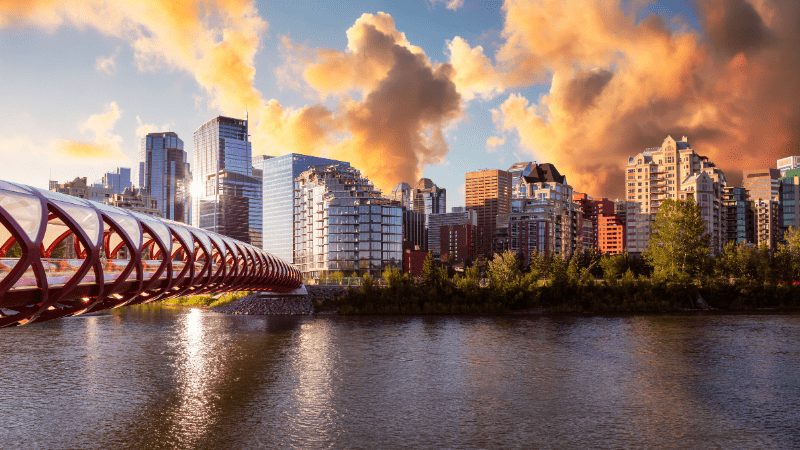
As arborists living and working in the heart of the Canadian Prairies, we know that our landscape isn’t naturally a forest. Our vast, beautiful horizons are defined by grass and wind. Yet, within our cities—from the river valleys of Edmonton and Saskatoon to the historic neighborhoods of Regina and Calgary—we have built some of the most resilient urban canopies in the world.
Urban forestry is more than just planting a tree and walking away. It is the science and art of managing a collective “living infrastructure” that battles extreme temperature swings, drought, and pests. At Green Drop, we’ve seen firsthand how a dedicated approach to the urban forest can transform a dusty suburban street into a thriving, cooling corridor.
The most successful urban forestry projects aren’t dictated by a single entity; they are the result of collaboration. In our experience, three key partners make the difference:
Schools provide a unique opportunity for “micro-forest” projects. By planting native species like the Bur Oak or American Elm on school grounds, we aren’t just providing shade for students; we are creating outdoor classrooms. We’ve partnered with several Prairie school divisions to turn barren playgrounds into diverse woodlots.
Newer developments often struggle with “Heat Island Effect” because their young trees haven’t reached maturity. We work with HOAs to implement long-term maintenance plans that ensure high survival rates for saplings, ensuring that the community’s investment actually grows in value.
Cities are the backbone of urban forestry. By coordinating with city planners, we help manage the “Public-Private” boundary, ensuring that the trees in your backyard and the trees on the boulevard work together to create a continuous canopy.
Diversity is Our Best Defense
Historically, Prairie cities relied too heavily on a single species (like the American Elm or the Ash). This made our forests vulnerable to Dutch Elm Disease and Emerald Ash Borer. Today, our projects prioritize a “10-20-30 rule”: no more than 10% of one species, 20% of one genus, and 30% of one family.
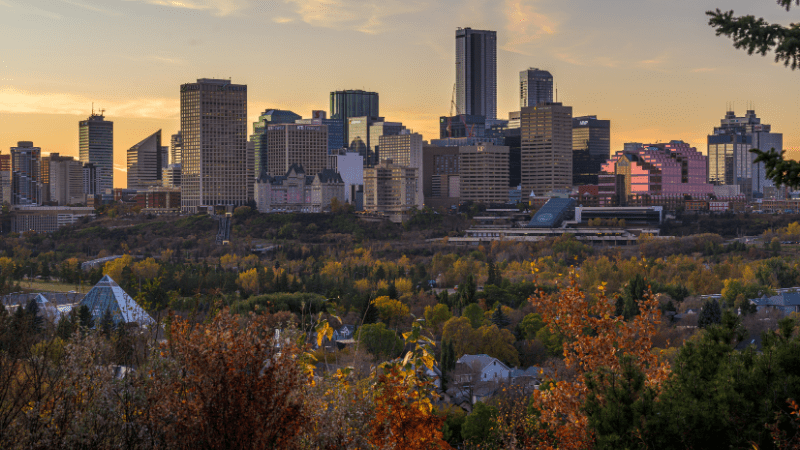
When we talk about urban forestry, we often focus on the biological health of the tree. But for the people living near them, the benefits are felt in every breath and every glance out the window.
A well-placed tree is better than an air conditioner. In the Prairies, where the summer sun is relentless, deciduous trees on the south and west sides of buildings provide shade in the summer while allowing sun through in the winter.
It’s a proven fact: people want to live on tree-lined streets. Trees add “curb appeal” that no amount of siding or paint can match.
There is a psychological shift that happens when a community goes green. Studies show that access to urban forests reduces stress and encourages outdoor physical activity. Our school projects, in particular, have shown that students are more focused and calmer when they have “green breaks.”
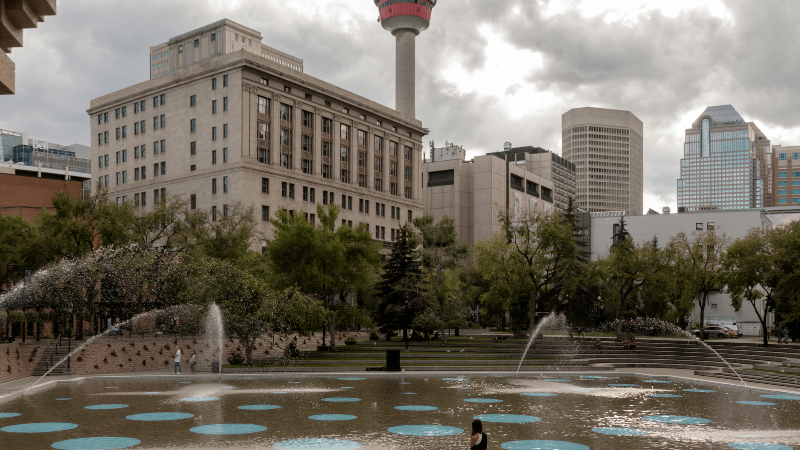
The biggest mistake in urban forestry is thinking the job is done once the tree is in the ground. On the Prairies, the first three to five years are critical. Our success stories are built on:
You don’t need a multi-million dollar budget to improve your local urban forest. Every success story we’ve highlighted started with a single conversation.
Steps for Community Leaders:
At Green Drop, we are committed to growing the Prairie canopy one project at a time. Whether you are a homeowner looking to plant a single “legacy tree” or an HOA board planning a community-wide revitalization, the principles of urban forestry remain the same: diversity, care, and a vision for the future.
Are you ready to start your own success story? Contact Green Drop today for an Urban Forestry Consultation.


