How to Care for Your Trees in the Intense Summer Heat
Summer in our part of the world is a welcome reprieve from the frigid temperatures...
READ MORE
Say hello to beautiful trees. Tell us your location to get the best tree care services for your area!

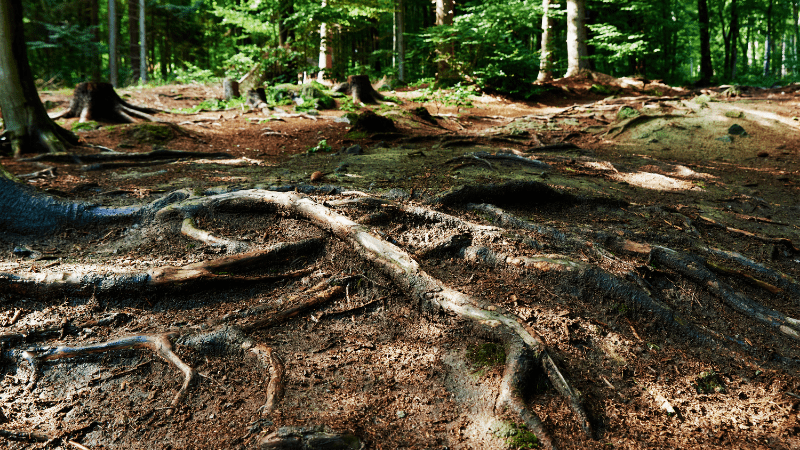
As arborists, we spend our days caring for the visible majestic crowns and solid trunks of your trees. But what most people don’t realize is that the true powerhouse—the critical engine driving a tree’s health and stability—is completely out of sight. We’re talking about the root system, a complex, often misunderstood network that requires thoughtful, science-based care.
The common image of a tree is a massive, deep taproot plunging straight down. The reality is far different, and understanding this truth is the key to effective tree preservation.
Forget the myth of the deep-diving taproot. Our industry research and decades of field experience confirm that the vast majority of a tree’s vital root structure is surprisingly shallow.
A staggering 90% of a tree’s roots are located in the top 30 cm (about 12 inches) of soil.
This thin layer is where oxygen, water, and essential soil nutrients are most abundant, making it the tree’s primary feeding zone. This single fact has huge implications for homeowners and landscapers:
Another major misconception is that a tree’s roots only extend as far as its canopy drip line. If you’ve ever watched a large tree sway in the wind and wondered how it stays grounded, the secret is its incredible lateral spread.
In a mature, healthy environment, a tree’s roots extend outwards 2–3 times wider than the canopy . This massive, widespread network is what provides the structural stability and allows the tree to efficiently scavenge for water and nutrients over a large area.
This means that construction, landscaping, or even significant chemical application many feet beyond the visible canopy can still directly impact your tree. As arborists, when we assess a tree’s health or a construction site, we must always account for this vast, invisible root protection zone.
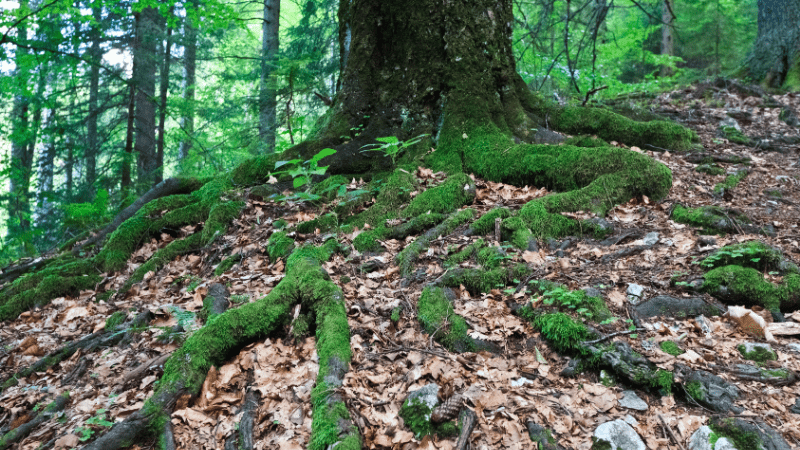
We cannot talk about root health without talking about soil health. Tree roots don’t just need dirt; they need a functioning ecosystem. The health and vitality of your tree’s entire root system depend on three key soil characteristics:
As professional arborists, our approach is not just about pruning and treating the crown; it’s about treating the soil environment as the foundation of your tree’s well-being. By understanding the shallow, wide-reaching nature of the root system and prioritizing soil health, we can ensure the majestic trees in your landscape remain strong, healthy, and beautiful for generations to come.
Our signature service, RootBoost Fertilization, utilizes specialized equipment for deep-root feeding. This process involves injecting a liquid nutrient solution directly into the soil beneath the canopy. This method breaks up compacted soil, allowing the roots better access to oxygen and water, all while delivering the perfect balance of specific nutrients for your tree.
If you’ve noticed signs of stress or poor health in your trees, our ISA-Certified Arborists can provide a science-backed assessment and provide solutions to help your trees thrive—not just survive—year round.


