How to Care for Your Trees in the Intense Summer Heat
Summer in our part of the world is a welcome reprieve from the frigid temperatures...
READ MORE
Say hello to beautiful trees. Tell us your location to get the best tree care services for your area!

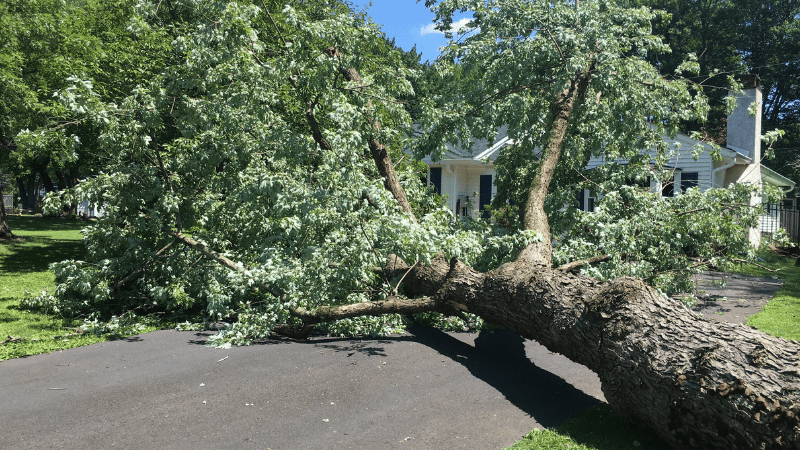
Your trees are some of your property’s greatest assets. They offer shade from the hot summer sun, add undeniable curb appeal, and have grown alongside your family or community for decades. But just like any living thing, trees change over time. From the brutal freeze-and-thaw cycles of our Western Canadian winters to unexpected internal decay, a tree that looks perfectly healthy on the outside can sometimes harbor hidden structural issues.
As homeowners, property managers, and municipalities, we love our trees—but we also have a responsibility to keep our properties safe. That is where a professional tree risk assessment comes in.
Instead of waiting for a severe storm to show you where a tree is weak, a proactive assessment lets you understand your canopy’s structural integrity, mitigate hazards, and protect both your loved ones and your investments.
When you request a structural evaluation from Green Drop, you aren’t just getting a quick visual glance. Our team features the largest group of ISA-Certified Arborists in Western Canada, many of whom hold the specialized ISA Tree Risk Assessment Qualification (TRAQ).
A TRAQ-certified arborist uses a standardized, science-backed methodology to systematically evaluate your tree. The process involves:
The goal of a tree risk assessment isn’t to immediately cut down every imperfect tree. Rather, it is to provide you with an objective, clear breakdown of risk so you can make informed decisions about pruning, support systems, or, if necessary, safe removal.
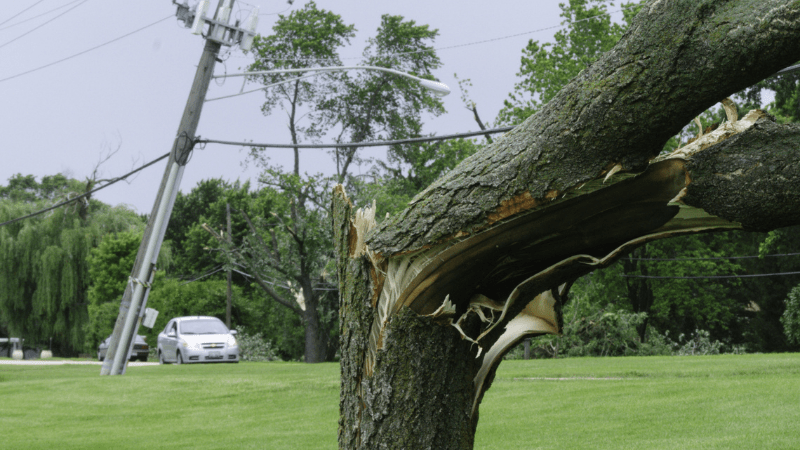
Trees are incredibly resilient, but external stressors like soil compaction, heavy storms, and mechanical damage can leave them vulnerable. During an assessment, our arborists focus on several key structural warning signs:
Dead branches are brittle and lack the flexibility to withstand high winds or heavy snow loads. Large pieces of deadwood in the canopy can fall without warning, posing an immediate hazard to anyone walking below.
Deep, vertical splits along the trunk—often caused by rapid temperature swings or severe winter frost cracks—compromise a tree’s load-bearing strength. If two cracks occur on opposite sides of the trunk, or if a crack is accompanied by wood decay, the structural risk increases significantly.
Not all leaning trees are dangerous. A tree that grew at an angle to reach sunlight is often well-anchored. However, a sudden lean, or a lean accompanied by cracked, mounded soil at the base, indicates that the tree’s root plate is lifting and failing.
A tree is only as strong as its underground foundation. Soil compaction from construction, severed roots from trenching, or fungal infections like root rot can quietly hollow out a tree’s support system. Because roots are hidden, we closely monitor secondary indicators like fungal brackets (mushrooms) growing at the base of the trunk.
A tree with structural defects in the middle of an empty forest poses almost no risk because there is nothing for it to fall on. However, that exact same tree becomes a high-priority hazard when it stands in a “high-target zone.”
High-risk trees are typically those located near:
During a tree risk assessment, our arborists carefully cross-reference the severity of the tree’s defect with the likelihood of it hitting a specific target, ensuring your maintenance budget is spent where public safety is most at risk.
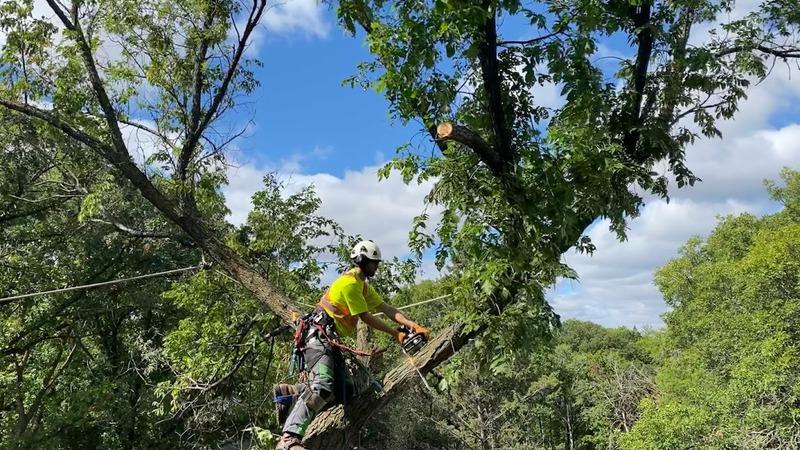
The ISA TRAQ method removes the guesswork by categorizing overall risk into a matrix based on two main variables: the likelihood of failure and impact, and the consequences of failure.
Ultimately, a tree is given one of four risk ratings:
As a property owner or municipal manager, ignoring a visibly failing tree can leave you legally liable for “negligence” if it causes property damage or personal injury. Waiting for a storm to do the work of an arborist is an expensive, stressful, and entirely avoidable gamble.
Investing in a proactive tree risk assessment reduces your liability in several vital ways:
Your canopy is a long-term investment. Don’t wait for the next heavy windstorm or deep freeze to wonder if your trees are secure.
Whether you are a homeowner wanting peace of mind, a developer planning a construction project, or a municipality looking to conduct a comprehensive tree inventory, Green Drop is here to help. Contact our team today to schedule a comprehensive tree risk assessment with one of our ISA-certified arborists, and keep your landscape strong, beautiful, and safe for years to come.


