How to Care for Your Trees in the Intense Summer Heat
Summer in our part of the world is a welcome reprieve from the frigid temperatures...
READ MORE
Say hello to beautiful trees. Tell us your location to get the best tree care services for your area!

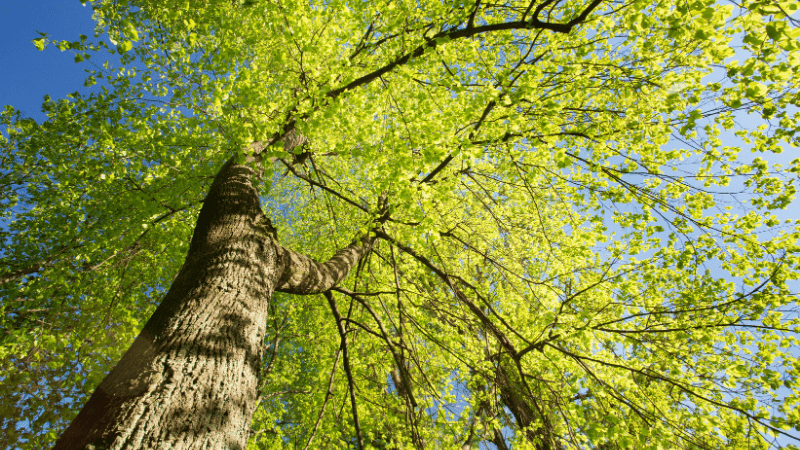
As the snow retreats from the Canadian prairies and the first hints of green appear on the horizon, every homeowner’s focus shifts to the landscape. At Green Drop, we view your yard not just as a collection of plants, but as a living ecosystem. Trees are the anchors of that ecosystem, providing shade, value, and beauty. However, the harsh conditions of our region—from erratic temperature swings to specific local pathogens—mean that tree health care isn’t a “set it and forget it” task.
In this guide, our certified arborists break down the essentials of maintaining a resilient urban forest, focusing on the critical spring window, pest management, and the science of soil nutrition.
In the world of tree health care, timing isn’t just a factor—it’s the entire game. In the prairies, our growing season is short and intense. Trees wake up from dormancy with a massive burst of energy called “bud break.”
Many of the most effective treatments must occur before the tree fully leaves out. For example, dormant oil sprays—used to control scale insects and mite eggs—must be applied while the tree is still “sleeping.” If you miss this window, the pests hatch, and you are forced to use more aggressive, systemic treatments later in the season.
The window for spring fertilization and preventative fungal treatments usually spans from late April to early June, depending on the ground thaw. Applying nutrients during this period ensures that as the tree pulls water up to create new leaves, it is also pulling up the essential minerals required for cellular strength.
Our local environment presents a unique set of challenges. Being proactive is significantly more cost-effective than trying to save a dying tree.
These “sucking insects” are the most common nuisances in prairie yards. Aphids secrete a sticky substance called honeydew, which can lead to sooty mold. Mites, though nearly invisible to the naked eye, can bronze the needles of your evergreens until they drop.
A devastating bacterial disease that affects members of the Rose family (Apples, Pears, Mountain Ash). It looks like the branches have been scorched by fire.
While EAB has devastated forests in the East, we are constantly monitoring EAB zones as they move. Protecting our Ash canopy is a pillar of modern tree health care. If you are in a high-risk zone, preventative injections are the only way to ensure your Ash trees survive an infestation.
| Pest/Disease | Primary Targets | Key Identification Sign | Best Treatment Window |
|---|---|---|---|
| Aphids | Elm, Maple, Fruit Trees | Sticky leaves, curled foliage | Late Spring/Early Summer |
| Fire Blight | Apple, Pear, Cotoneaster | “Shepherd’s crook” branch tips | Late Winter (Pruning) |
| Spider Mites | Spruce, Cedar | Fine webbing, browning needles | Early Summer |
| EAB | All Ash species | D-shaped exit holes, thinning crown | Spring (Preventative) |
Mature trees in urban environments often suffer from “nutrient starvation.” In a forest, leaves fall and rot, returning nutrients to the soil. In a backyard, we rake those leaves away.
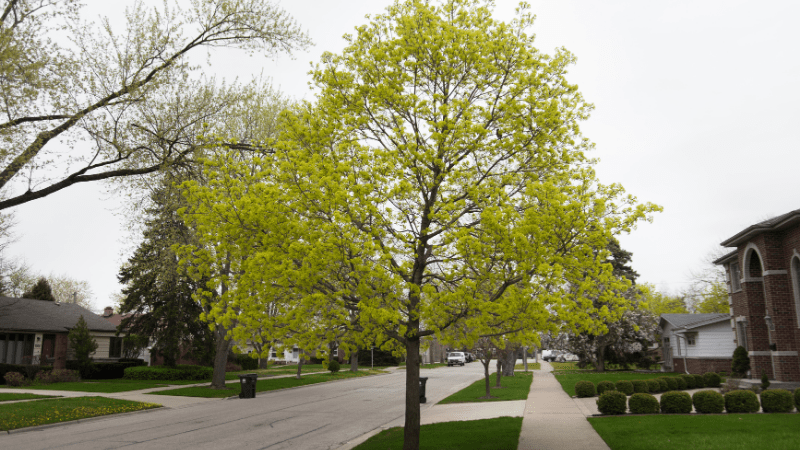
At Green Drop, we don’t believe in “blanket applications.” Your soil chemistry in one neighborhood might be drastically different from a yard just three blocks away.
Prairie soils are notoriously alkaline (high pH). When pH levels are too high, trees—especially species like Birch or Silver Maple—can suffer from Iron Chlorosis. The iron is present in the soil, but the tree’s roots are chemically “locked out” from absorbing it.
Through professional soil testing, we analyze:
Based on these results, our arborists create a customized prescription. This might include sulfur to lower pH, or specific micro-nutrient injections to turn yellowing leaves back to a vibrant, functional green.
The best way to manage tree health care is to start at the beginning. A “Right Tree, Right Place” philosophy reduces the need for chemical interventions later in the life cycle.
When we integrate health care with our planting programs, we look at the long-term success of the specimen. This involves:
You might wonder, “Can’t I just buy a fertilizer spike at the big-box store?”
The reality of prairie arboriculture is complex. Surface-level fertilizers often feed the grass but never reach the tree roots. Improperly timed pesticide applications can kill beneficial pollinators while leaving the target pests unharmed.
Professional tree health care is an investment in your property’s “living infrastructure.” A healthy, mature tree can add up to 15% to your home’s resale value. More importantly, it provides the oxygen, cooling, and mental health benefits that make our communities livable.
The transition from winter to spring is a time of immense stress and immense opportunity for your trees. By understanding the timing of treatments, identifying local pests like fire blight or aphids, and providing stage-specific nutrition through soil testing, you are ensuring your landscape thrives for generations.
Don’t wait until your leaves are falling in July to wonder what went wrong in May. Tree health care is a proactive journey.
Ready to give your trees the Green Drop advantage? Contact our ISA-certified arborists today for a comprehensive site evaluation and custom health care plan. Let’s keep the prairies green, one tree at a time.


