How to Care for Your Trees in the Intense Summer Heat
Summer in our part of the world is a welcome reprieve from the frigid temperatures...
READ MORE
Say hello to beautiful trees. Tell us your location to get the best tree care services for your area!

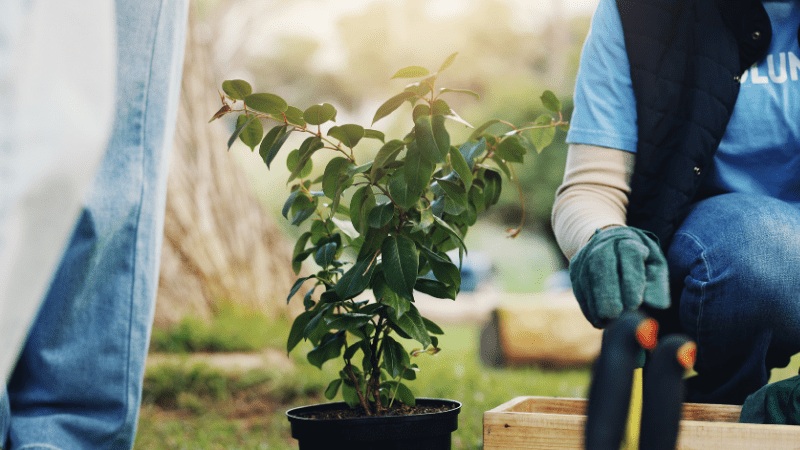
At Green Drop, we believe that planting a tree is one of the most rewarding investments you can make for your property and the environment. However, as arborists, we often see young trees struggling or failing prematurely—not because of pests or disease, but because of how they were put into the ground.
If you want your new leafy companion to live for decades rather than just a few seasons, you need to avoid these common planting mistakes. Here is a breakdown of what often goes wrong and how the pros get it right.
The most frequent error we encounter is improper planting depth.
The Fix: Always locate the “root flare”—the point where the trunk widens at the base—and ensure it sits slightly above the soil line.
Mulch is a tree’s best friend, but too much of a good thing can be deadly. “Volcano mulching” is the practice of piling mulch high against the trunk of the tree.
This traps moisture against the bark, causing rot and inviting wood-boring insects. It also encourages roots to grow upward into the mulch rather than down into the soil.
The Fix: Apply mulch in a “donut” shape. Keep it 2-4 inches deep and ensure it stays a few inches away from the trunk itself.
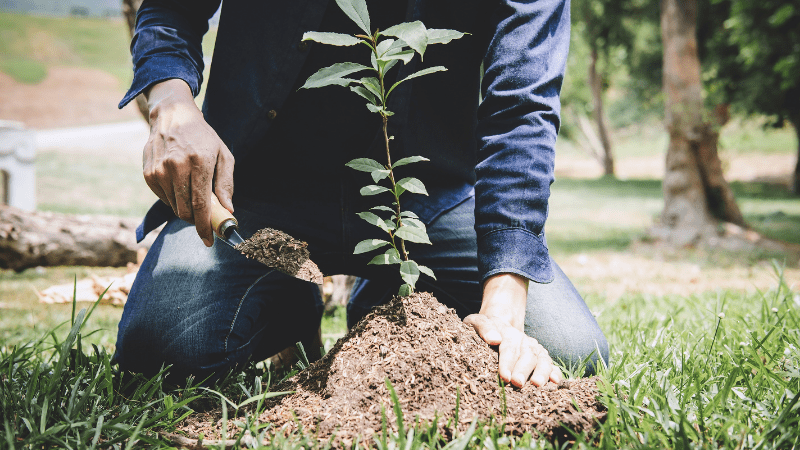
Many trees come from nurseries with soil piled too high in the burlap ball or plastic pot. If you simply dig a hole and drop it in, the root flare remains buried. This leads to the same long-term health issues as planting too deep.
An Arborist’s Tip: Before you dig, gently brush away the top layer of soil in the nursery container until you find that first main structural root. That is your true depth gauge.
It’s tempting to fill the planting hole with 100% rich potting soil or heavy fertilizers. However, this creates a “flowerpot effect.” If the soil in the hole is significantly different from the surrounding native soil, the roots will refuse to grow past the edge of the hole, becoming root-bound.
The Fix: Use the native soil you dug out of the hole to backfill. You can mix in a small amount of organic compost, but the goal is to get the tree adjusted to the actual soil it will live in for the rest of its life.
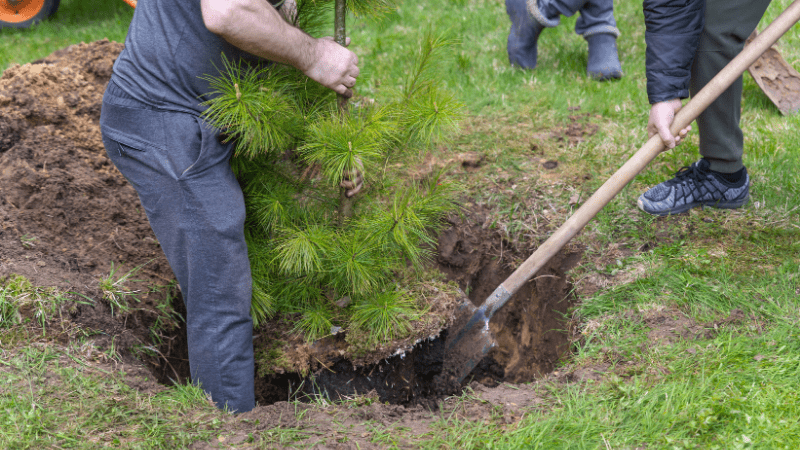
A classic planting mistake is choosing a tree based solely on looks without considering the site’s conditions. Putting a moisture-loving Willow in a high-and-dry spot, or a Sun-loving Oak in the deep shade of a building, is a recipe for a “failure to thrive.”
The Fix: Evaluate your sunlight, soil pH, and drainage before heading to the nursery. Always consider the “mature size” of the tree so it doesn’t outgrow its space in ten years.
A newly planted tree is like a newborn; it cannot fend for itself. The most common reason new trees die in their first year is a lack of consistent watering. Many homeowners assume that if it rains, the tree is fine. In reality, it takes a long time for rain to penetrate a dense root ball.
The Fix: Establish a watering plan. For the first two growing seasons, your tree needs deep, slow soakings—especially during the heat of summer.
When you hire a professional arborist to plant your trees, you aren’t just paying for the labor; you’re paying for a survival guarantee.
At Green Drop, our experts:
Avoiding these planting mistakes is the difference between a tree that survives and a tree that thrives. If you’re ready to add some canopy to your yard, contact Green Drop today to ensure your investment is planted the right way, the first time.


