How to Care for Your Trees in the Intense Summer Heat
Summer in our part of the world is a welcome reprieve from the frigid temperatures...
READ MORE
Say hello to beautiful trees. Tell us your location to get the best tree care services for your area!

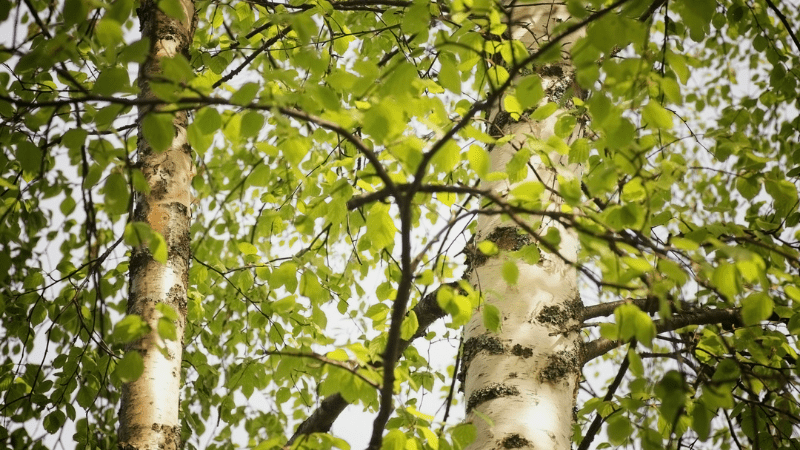
Summers in Western Canada can be downright beautiful, but the combination of scorching heatwaves, intense sun, and sudden dry spells can put an immense amount of pressure on our urban canopies. While a mature maple or a hardy spruce looks tough, even the most resilient trees can quietly suffer under extreme environmental conditions.
At Green Drop Trees, our ISA-certified arborists see it every year: tree stress peaks when the summer heat turns up. Catching the early warning signs of a struggling tree gives you the best shot at helping it bounce back before lasting damage occurs.
Here is what you need to know about identifying tree stress this summer, understanding its root causes, and knowing when it’s time to call in the professionals.
Trees cannot tell us when they are thirsty or overwhelmed by heat, but they do show physical symptoms. If you notice any of the following red flags in your yard, your landscape is likely experiencing environmental tree stress:
When a tree loses moisture through its leaves faster than its roots can absorb water from the soil, the leaves will lose their rigidity. Wilting or curling is often the very first distress signal a tree sends out.
Leaf scorch looks exactly like it sounds—the edges and tips of the leaves become brown, dry, and crispy. This happens because the tree is systematically cutting off water distribution to its outermost extremities to protect its core trunk and root systems.
Have you noticed your yard looking like autumn in July? Dropping green or partially scorched leaves is a drastic survival mechanism. By shedding foliage, the tree reduces its overall surface area, minimizing water loss through transpiration.
If your tree’s canopy looks sparse, see-through, or stunted compared to previous years, it means the root system underground is actively struggling. A thinning canopy is a clear indicator that the tree lacks the energy and resources to support full, vibrant growth.
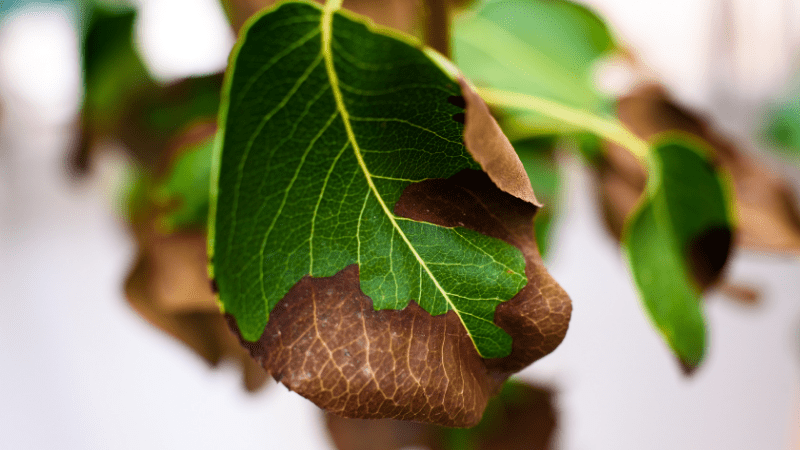
When a tree begins to decline, homeowners often wonder: Is my tree just thirsty, or is it sick? Discerning between basic drought-induced tree stress and a full-blown pest infestation or fungal disease can be tricky, as they often overlap.
Here is how you can spot the differences:
The Arborist Insight: It is important to remember that these two issues are deeply interconnected. Environmental tree stress actively weakens a tree’s natural immune system. A dehydrated, heat-stressed tree releases chemicals that attract wood-boring beetles and opportunistic pests, making it a prime target for secondary infections.
If you have recently added a new tree to your property, it requires extra attention during the summer months. Newly planted or young trees are exceptionally vulnerable to tree stress because they lack an established root system.
When a tree is grown at a nursery and transplanted into your yard, it loses a significant portion of its fine, water-absorbing roots in the process. Until those roots can expand outward into the surrounding soil—a process that can take a few years—the young tree possesses a incredibly small structural safety net.
Without a deep root system to tap into lower soil moisture reserves, a few days of intense heat can push a young tree into critical failure. Specialized care, such as utilizing slow-release watering bags and avoiding mid-summer pruning, is vital to help them survive their first few prairie summers.
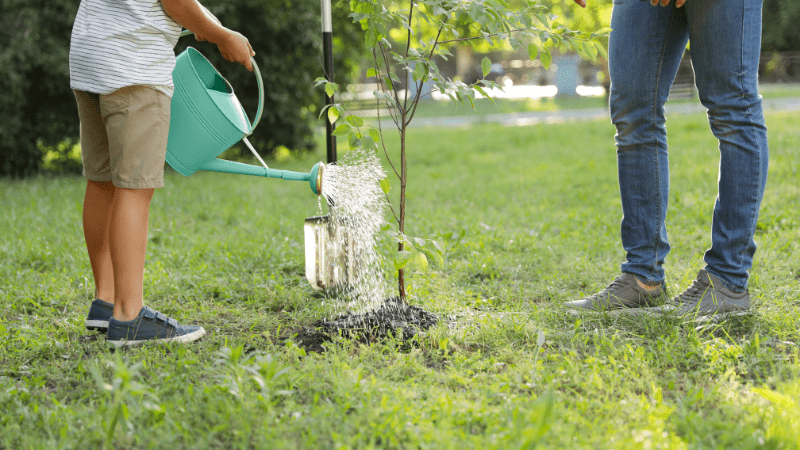
Ignoring the early warning signs of tree stress can lead to a slow, downward spiral for your landscape. When a tree is constantly operating in survival mode, it expends all of its stored energy reserves just to stay alive, leaving nothing left for growth or self-defense.
Over time, chronic summer stress leads to:
While basic summer maintenance—like deep watering at the drip line and applying a protective ring of organic mulch—can help mitigate mild dehydration, some situations require expert intervention.
You should reach out to an ISA-certified arborist for a professional tree health assessment if you observe:
At Green Drop Trees, our science-backed approach utilizes advanced diagnostic tools to spot underlying structural and soil issues before they become irreversible problems.
Don’t wait until your beautiful yard turns into a collection of stressed-out sticks. If your trees are showing signs of summer struggle, book a free tree assessment with our local, certified arborists today. We live and work in your communities—serving Calgary, Edmonton, Red Deer, Saskatoon, Regina, and Winnipeg—and we know exactly what your trees need to thrive year-round.


