How to Care for Your Trees in the Intense Summer Heat
Summer in our part of the world is a welcome reprieve from the frigid temperatures...
READ MORE
Say hello to beautiful trees. Tell us your location to get the best tree care services for your area!

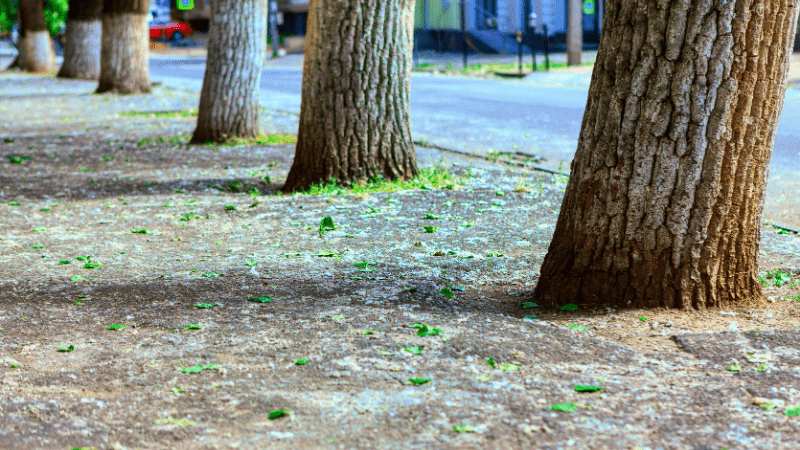
When we look out across the vibrant urban canopies of Calgary, Edmonton, Saskatoon, or Winnipeg, we tend to evaluate our trees from the ground up. We check for lush leaf growth, inspect the bark for pests, and ensure branches are pruned safely away from power lines.
But as ISA-certified arborists, our eyes are always trained on what’s happening below the surface.
The greatest threat to an urban tree often isn’t a visible pest or a severe Prairie storm—it’s soil compaction. Underneath our sidewalks, yards, and boulevards, a quiet crisis is taking place. When soil loses its structure, trees lose their lifelines.
Understanding how soil compaction impacts tree health, how to recognize the warning signs, and how to fix it is essential for anyone looking to protect their local landscape.
In a pristine, natural forest, the soil is light, spongy, and filled with tiny pockets of air and water. This structure is continuously maintained by decaying organic matter and active soil biology.
In towns and cities, however, human activity completely alters this balance. Soil compaction occurs when weight or pressure is applied to the earth, squeezing the air and space out of the soil profile.
The two most common culprits behind this issue include:
The machinery used to build houses, pave driveways, or renovate properties applies immense downward force. Even a single pass by a skid-steer or a heavy truck over a tree’s root zone can instantly crush the delicate pore spaces in the soil, sealing it off for decades.
You don’t need heavy machinery to damage soil. Regular human activity—like kids playing under a mature backyard tree, pets pacing along a fence line, or pedestrians cutting across a boulevard—gradually packs the earth down until it is as hard as concrete.
To understand why compressed soil is so dangerous, you have to look at how roots behave. Tree roots require two fundamental elements to survive and grow: oxygen and moisture.
When soil compaction takes hold, the physical composition of the ground changes dramatically:
Because the damage occurs underground, soil compaction can be difficult to spot until the tree is already in severe distress. However, if you keep a close eye on your yard and surrounding trees, you can catch the symptoms early.
Signs in the Ground:
Signs in the Tree Canopy:
The good news is that compacted ground doesn’t have to be a permanent death sentence for your trees. At Green Drop, we use advanced, science-backed techniques to breathe life back into the soil.
Core Aeration vs. Vertical Mulching
While standard lawn aeration helps turfgrass, deep tree roots need more comprehensive relief. Arborists utilize specialized pneumatic tools (like supersonic air knives) to fracture the dense earth around the root zone without damaging the roots themselves. We can then backfill these new fissures with organic compost or nutrients to keep the soil porous.
RootBoost and Organic Amendments
Once the soil is fractured, introducing professional-grade soil conditioners makes a world of difference. Our tailored RootBoost treatments inject essential nutrients, mycorrhizal fungi, and organic matter deep into the root zone, turning dense dirt back into a thriving, self-sustaining ecosystem.
While backyard trees struggle with compaction, our municipal and boulevard trees are on the absolute front lines of this battle.
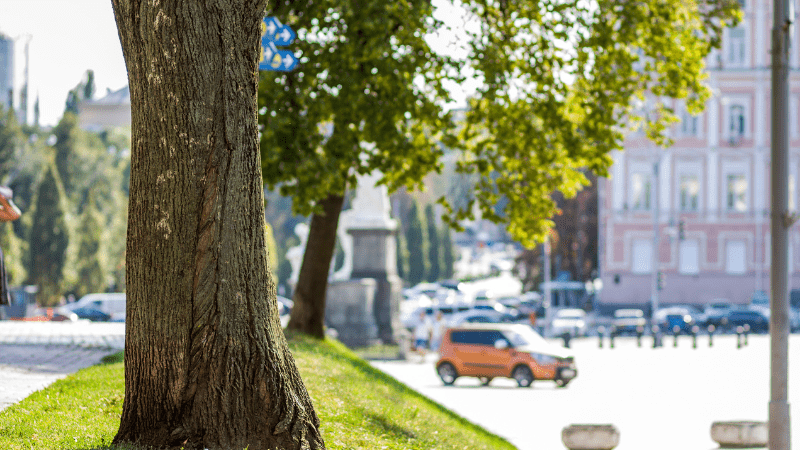
Boulevard trees—often planted in narrow strips of dirt between sidewalks and busy roadways—live in some of the most hostile environments imaginable. They endure constant vibrations from traffic, heavy snow piling on their root zones in the winter, and continuous foot traffic.
Healthy municipal trees are vital assets that appreciate over time. They cool our concrete streets, mitigate stormwater runoff, and clean our air. However, without proactive management, structural soil engineering, and professional aeration cycles, our urban canopies cannot survive long-term. Protecting these public trees means protecting the very foundation they stand on.
Let’s Protect Your Trees from the Ground Up
If you notice signs of stress in your mature trees, or if you are planning a construction project that might endanger your yard’s root systems, don’t wait for the canopy to decline.
Green Drop has Western Canada’s largest team of ISA-certified arborists, equipped with the expertise and state-of-the-art tools needed to restore soil health. Contact our team today for a comprehensive soil and tree health assessment!


