How to Care for Your Trees in the Intense Summer Heat
Summer in our part of the world is a welcome reprieve from the frigid temperatures...
READ MORE
Say hello to beautiful trees. Tell us your location to get the best tree care services for your area!

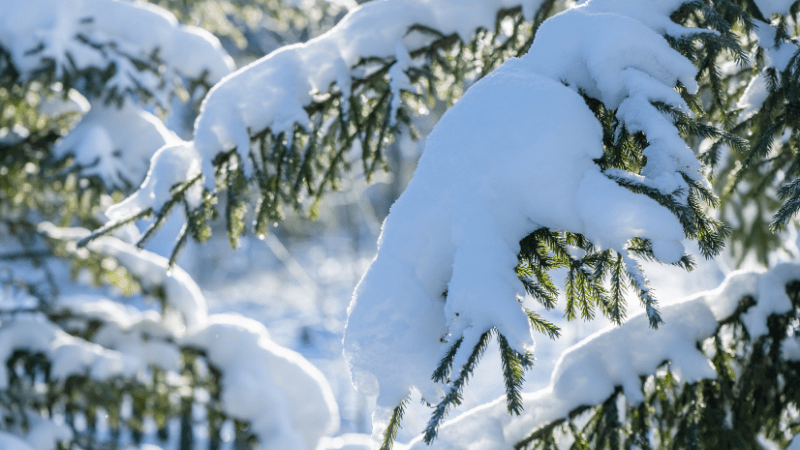
Winter transforms our landscapes into stunning, snow-covered wonderlands, but for the trees on your property, it’s the most demanding season of the year. As arborists, we see firsthand how the weight of a single heavy snowfall or a coating of “glaze” ice can turn a majestic canopy into a hazardous mess of snapped limbs and damaged property.
Repairing a tree after a structural failure is often more expensive—and less effective—than preventing the damage in the first place. Here is what you need to know about protecting your trees from winter’s heavy hand.
It isn’t just “bad luck” when a branch snaps during a storm. Usually, it’s a combination of environmental physics and the tree’s existing structural health.
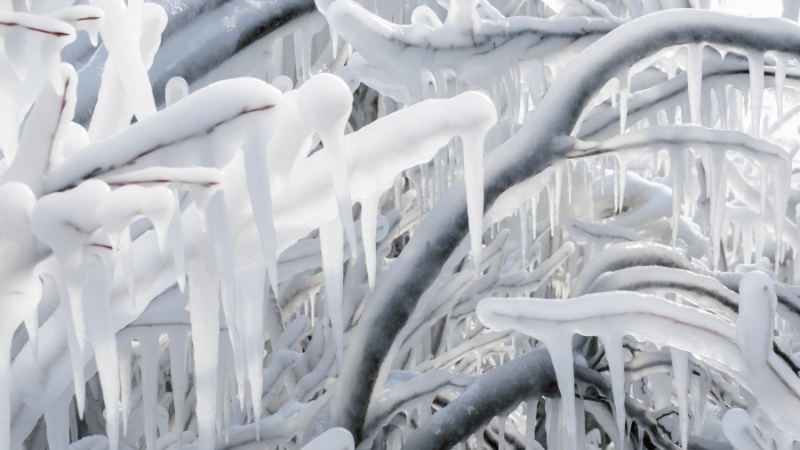
The best time to protect your trees from winter is before the first flake falls, but there are steps you can take throughout the season.
The most effective defense is a well-maintained structure. By pruning your trees during the dormant season, an arborist can remove “hazard” branches—those that are dead, diseased, or structurally weak. Thinning the canopy slightly also reduces the “sail effect,” allowing wind and snow to pass through more easily.
If you see your evergreens or low-hanging deciduous branches bowing under a fresh coat of snow, your instinct might be to shake them. Don’t. Shaking frozen branches can cause them to snap or damage the internal vascular tissue.
For multi-stemmed evergreens (like Cedars or Junipers), some homeowners use twine to keep branches from splaying. While this can help, avoid tying them too tightly, as this can girdle the tree or cause moisture to trap against the bark, leading to fungal issues. For larger trees, professional cabling and bracing is a much safer, permanent solution.
If you are planting new trees, consider their “snow load” tolerance. In our region, it’s best to prioritize strong-wooded species like Oaks or certain Maples. Brittle-wooded trees, such as Willows or Silver Maples, are beautiful but are far more prone to “ice-loading” failures.
We often get asked: “Can I just do this myself?”
DIY is fine for:
Your trees are an investment in your property’s value and beauty. A proactive winter inspection can mean the difference between a tree that thrives for decades and one that has to be removed after a single bad night in January.
At Green Drop, our team of expert arborists is dedicated to the health and safety of your urban forest. Whether you need structural pruning to prep for the season or a safety assessment after a storm, we’re here to help.
Ready to winter-proof your landscape? Contact Green Drop today for a professional tree assessment.


