How to Care for Your Trees in the Intense Summer Heat
Summer in our part of the world is a welcome reprieve from the frigid temperatures...
READ MORE
Say hello to beautiful trees. Tell us your location to get the best tree care services for your area!

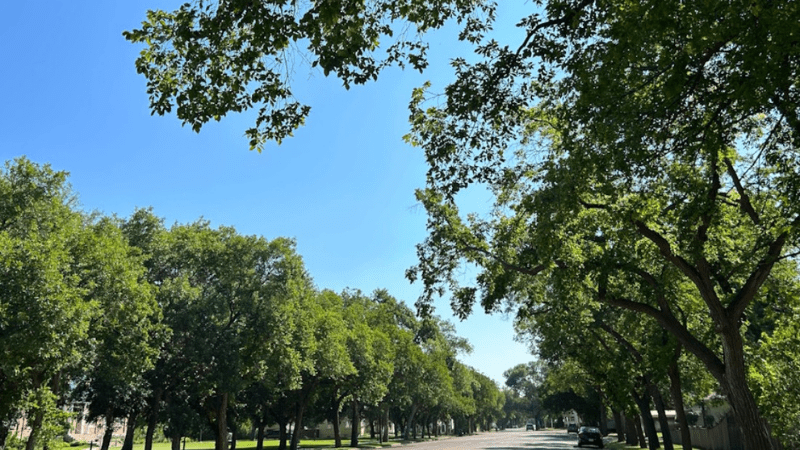
As arborists living and working across the Canadian Prairies, we often describe the urban forest as a “living utility”. Much like water pipes or electricity lines, the collective cover of leaves, trunks, and roots across our towns and cities serves as critical infrastructure. However, unlike paved roads or concrete structures that depreciate from the day they are built, healthy trees appreciate in value over time—delivering greater ecological, economic, and social returns as they mature.
Managing this dynamic resource requires far more than just planting a sapling and walking away. Modern municipal urban forestry demands data-driven inventory management, proactive health maintenance, and strong strategic partnerships between municipal leaders, professional arborists, and local residents.
At Green Drop, we are proud to work hand-in-hand with Prairie municipalities to audit, expand, and safeguard their green canopies. A prime example of this collaborative approach is our recent work in Saskatchewan, where the City of Weyburn launched a comprehensive survey inviting input for Weyburn’s urban forestry program as part of a multi-phase management planning initiative.
In this article, we explore why municipal urban forestry is fundamental to community well-being, how strategic partnerships and grant funding accelerate canopy growth, and how public involvement ensures our urban forests thrive for generations to come.
For decades, urban trees were viewed primarily as aesthetic decorations—nice amenities to have, but frequently the first items trimmed during municipal budget cuts. Today, urban planners, municipal councils, and certified arborists recognize that trees are essential “green infrastructure”.
In the rugged climate of the Prairies—characterized by scorching summer heat, sudden thunderstorms, severe winter freezes, and relentless wind—a well-managed urban forest delivers vital functional services:
You cannot effectively manage what you have not accurately measured. Managing a city’s urban forest requires moving beyond reactive maintenance (such as simply removing dead or hazardous limbs) into structured, proactive care.

A successful urban forestry initiative begins with a comprehensive public tree inventory. Arborists conduct field assessments to log each tree’s species, caliper size, health status, structural integrity, and exact geographic coordinates using GIS (Geographic Information Systems) mapping.
In Weyburn, Saskatchewan, the municipality embarked on a major initiative to modernize its canopy strategy. As reported when the Parks Manager invited public feedback on urban forestry, the city partnered with Green Drop Tree Care to secure grant funding from the Federation of Canadian Municipalities (FCM) to support a $131,000 multi-phase project.
The initial phase focused directly on completing a thorough inventory of city-owned public trees lining streets, municipal parks, and regional green spaces like the Tatagwa Parkway. This inventory provides the empirical baseline necessary to identify priority planting zones, recognize aging stands, and proactively combat threats such as Dutch Elm Disease (DED) and Emerald Ash Borer.
Municipal budgets face constant competition from traditional infrastructure needs like road paving, water system upgrades, and emergency services. Consequently, grant programs serve as crucial force multipliers for urban forestry expansion.
Through programs like the FCM’s Green Municipal Fund and the federal 2 Billion Trees initiative, municipalities can offset up to 80% of project costs associated with developing urban forest management plans and conducting feasibility studies.
| Program / Funding Source | Purpose | Impact on Prairie Municipalities |
|---|---|---|
| FCM Green Municipal Fund | Covers up to 80% of urban forestry study and planning costs. | Enables smaller towns and mid-sized cities to afford professional arboricultural assessments. |
| 2 Billion Trees Program | Matching funds for large-scale afforestation and urban planting. | Expands canopy equity and accelerates planting on public boulevards and parks. |
| Public-Private Partnerships | Shared investment between cities, arborists, and community groups. | Ensures long-term maintenance, deep-root fertilization, and initial survival guarantees. |
By securing grant support, cities can shift their approach from short-term fixes to strategic 10-to-20-year urban forest management plans.
Modern urban forestry is guided by two core principles: Canopy Equity and Species Diversity.
Bridging the Canopy Gap
Historically, green canopies were unevenly distributed across communities. Established, historic neighborhoods often enjoy towering cathedrals of century-old American Elms, providing up to 40% shade cover. In contrast, newer residential developments, industrial sectors, and lower-income districts frequently lack canopy coverage, leaving residents vulnerable to high heat and elevated energy bills.
Using GIS mapping and public survey data, municipal foresters can pinpoint underserved areas and direct planting efforts where ecological and community health needs are highest.
Defense Through Diversity
Historically, many Prairie cities planted single-species monocultures—often lining every street exclusively with Green Ash or American Elm. While these trees are beautiful, monocultures create extreme biological vulnerability. The arrival of aggressive pests or diseases (such as Dutch Elm Disease or Emerald Ash Borer) can wipe out entire neighborhood canopies in a single season.
To build long-term resilience, Green Drop advocates for the 10-20-30 Diversity Standard:
Integrating hardy, climate-adapted varieties—such as Bur Oak, Hackberry, Ohio Buckeye, and specialized hybrid Maples—ensures that if one species faces a biological threat, the broader canopy remains intact.
An urban forest management plan cannot succeed in a vacuum. Because a significant portion of a city’s total canopy exists on private residential land, public involvement is essential to long-term success.
Empowering Community Voices
When municipalities invite public feedback, residents help shape local priorities regarding street tree care, boulevard planting expansion, and disease protection awareness.
In Weyburn’s public consultation phase, for instance, a 10-question community survey was designed to gather diverse perspectives—ranging from experienced gardeners to everyday park users—ensuring that the final management plan aligns with the community’s vision. Public feedback helps city managers answer crucial questions:
Local Stewardship in Action
Cities often lack the operational bandwidth to water every newly planted boulevard tree every single day during severe summer heatwaves. When residents adopt the trees outside their homes—providing supplemental slow-drip watering, maintaining a protective mulch ring, and keeping lawnmowers away from delicate trunks—young saplings are far more likely to reach maturity.
Community volunteer days, such as Weyburn’s popular Tatagwa Tree Day, showcase how hands-on events build pride, foster environmental stewardship, and accelerate local greening goals.
Planting a tree is only 10% of the work; the remaining 90% is ongoing maintenance and survival care. Urban soil environments are notoriously tough on tree roots, often suffering from heavy compaction, road salt contamination, and nutrient deficits.
At Green Drop, our team includes Western Canada’s largest group of ISA-Certified Arborists and Board-Certified Master Arborists. We utilize science-backed principles to protect both public and private trees:
Partnering for a Greener Tomorrow
A thriving urban forest is one of the most lasting gifts a community can bestow upon future generations. Achieving a resilient canopy requires clear long-term planning, steady investment, expert arboricultural management, and an engaged public.
Whether you are a municipal leader drafting a comprehensive management plan, a developer creating a new subdivision, or a homeowner looking to plant a legacy tree in your backyard, Green Drop possesses the experience, science, and passion needed to help your canopy thrive.
Ready to elevate your local canopy?
Explore Green Drop’s full range of services or speak with an ISA-Certified Arborist today:


