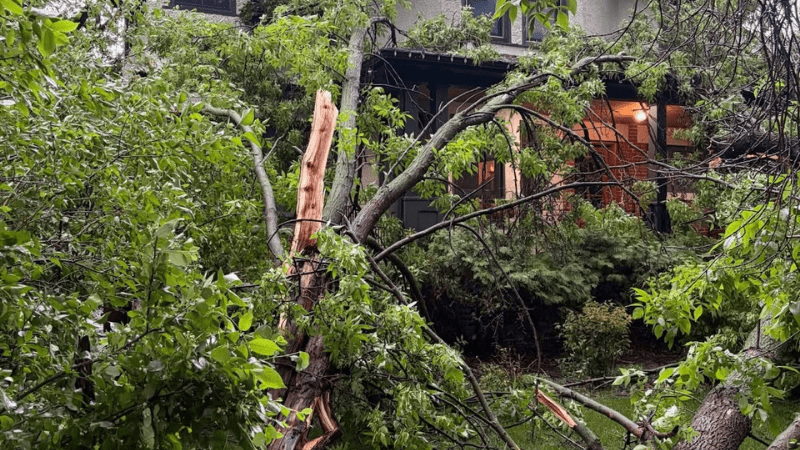
How to Prevent Storm Damage
Storm Damage: An Arborist’s Guide to Protecting Your Trees Before the Clouds Roll In
Summer across Western Canada brings a lot of welcome sunshine, but it also brings a unpredictable element: sudden, violent summer storms. From high prairie winds to heavy downpours and unexpected hail, our urban canopy takes a beating every single year.
As arborists, we often get called in after the damage is done—clearing massive limbs from roofs or assessing split trunks. But the truth is, a significant amount of storm damage is entirely preventable.
By understanding your trees’ vulnerabilities and taking proactive steps, you can safeguard your property and preserve the mature trees that bring so much beauty and value to your landscape. Here is what you need to know to get your yard storm-ready.
Identifying Weak Branch Structure and Failure Points
To prevent storm damage, you first need to know what a hazard looks like. Trees are incredible structural engineers, but structural defects can develop over time, creating clear failure points when high winds hit.
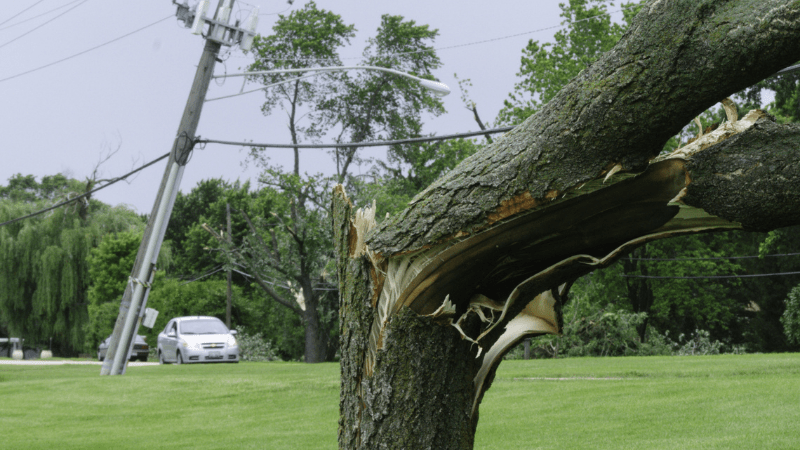
- Co-Dominant Stems (V-Crotches): This occurs when a tree grows with two or more main trunks of similar size arising from the same point. When the connection forms a tight “V” shape rather than a wide “U”, bark becomes trapped inside the union (included bark). This creates a highly unstable weak point prone to splitting right down the middle during heavy wind or snow loads.
- Decay and Hollows: Internal rot, fungal growth (like mushrooms at the base or on the trunk), and open cavities compromise the wood’s structural integrity. A tree can look perfectly green on top while being structurally hollow and vulnerable below.
- Poor Branch Attachments: Large limbs that grow at sharp, upward angles often have weak attachments to the main trunk, making them prime targets to tear away during a severe storm.
The Importance of Pruning for Storm Resilience
Property owners often ask how to minimize storm damage risk without removing a tree entirely. The single most effective answer is regular, professional pruning.
Proper pruning isn’t just about aesthetics; it changes how a tree interacts with the wind. When a tree has a dense, overgrown canopy, it acts like a giant sail. High winds catch the foliage, putting immense directional force on the trunk and root system.
Arborists utilize specific pruning techniques to build storm resilience:
- Crown Thinning: Carefully removing select small, live branches throughout the outer canopy. This reduces the “sail effect,” allowing strong winds to pass harmlessly through the tree rather than pushing against it.
- Deadwooding: Removing dead, dying, or diseased branches. These limbs are already structurally compromised and are usually the very first things to snap and become dangerous projectiles during a storm.
- Weight Reduction: Trimming the heavy, extended ends of long limbs to reduce the leverage and strain placed on the main trunk attachment.
Cabling and Bracing for Mature Trees
We love our mature trees, but as they age, large structural limbs become heavier and more susceptible to failure. If a beloved tree has a known structural defect—like a tight co-dominant stem—but is otherwise healthy, you don’t necessarily have to cut it down.
We can install structural support systems like cabling and bracing.
- Tree Cabling: Involves installing high-strength, flexible steel or synthetic cables high in the tree canopy between major limbs. This limits how far the branches can sway independently during a storm, redistributing the structural load and preventing them from tearing apart.
These specialized systems act like an insurance policy for your mature trees, helping them withstand intense forces they couldn’t survive on their own.
Inspecting Trees Before Storm Season Peaks
Timing is everything. Waiting until a severe weather warning is issued is too late to prevent storm damage. The best defense is a proactive inspection before storm season peaks in late spring and summer.
Walk your property and look for the following red flags:
- Are there any dead, hanging, or broken branches in the canopy?
- Can you see tight, V-shaped splits where major trunks meet?
- Are there signs of cracks in the trunk or deep cavities?
- Is the soil lifting or cracking near the root flare, indicating the tree might be leaning or shifting?
If you notice any of these warning signs, it is time to bring in a certified arborist. A professional hazard assessment can pinpoint hidden dangers and address them before the first storm clouds gather.
What to Do After a Storm Hits
Even with the best preventative care, extreme weather can still cause unexpected problems. If a severe storm hits your neighborhood, safety must be your absolute top priority. Here is your post-storm action plan:
- Check for Immediate Safety Hazards: Look up before you walk under any trees. Watch out for “widowmakers”—broken, heavy limbs hanging loosely high in the canopy that could fall at any moment. Stay far away from any downed utility or power lines. If a tree or limb is touching a power line, do not go near it; call your local utility company immediately.
- Evaluate the Damage Calmly: Minor damage, like small broken twigs or scattered leaves, can easily be cleaned up with a rake. However, if large limbs have torn away, trunks are split, or the tree is noticeably leaning, keep your distance.
- Do Not Attempt DIY Chainsaw Work on Large Hazards: Cutting large, storm-damaged limbs under tension or compression is incredibly dangerous. Wood can violently kick back, or limbs can shift unexpectedly.
- Call a Certified Arborist: If your trees have suffered significant damage, contact a professional tree care service. Arborists can safely remove hanging hazards, perform clean mitigation cuts to help the tree heal correctly, and assess whether a compromised tree can be saved or if it requires safe removal.
Let’s Get Your Trees Ready
Your trees are a vital part of your property’s beauty and value. Taking the time to prune, inspect, and protect them now means you can watch the summer storm clouds roll in with total peace of mind.
Think your trees might be vulnerable? Contact the team at Green Drop today to schedule a professional pre-storm inspection and custom pruning plan with our certified arborists.
FAQs
Are your arborists local to each service area?
What are the costs of regular tree health care?
What areas does Green Drop provide emergency tree services?
What does your DED management program involve?
What services do you offer?
Explore Our Latest Insights


5 Signs Your Tree Is in Trouble (And What to Do About It)