Tree Care
5 Min Read

How to Choose the Right Nursery Stock for Prairie Conditions

Published on 06 Mar 2026
How to Choose the Right Nursery Stock for Prairie Conditions

How to Choose the Right Nursery Stock for Prairie Conditions

Choosing the right nursery stock is the most critical decision you’ll make for your landscape. In Western Canada, our trees don’t just grow; they battle. Between -40°C winters, sudden chinooks, and summer droughts, a tree needs more than just a green leaf to survive—it needs a solid foundation.

At Green Drop, our ISA-certified arborists see the long-term results of “nursery floor” decisions every day. A poor choice at the garden centre can lead to structural failure or a dead tree within five years. Here is our expert guide on selecting the best nursery stock to ensure your urban forest stands tall for decades.

Bareroot vs. Potted vs. B&B: Which is Best?

When shopping for nursery stock, you’ll generally encounter three formats. Each has pros and cons depending on your goals and the time of year.
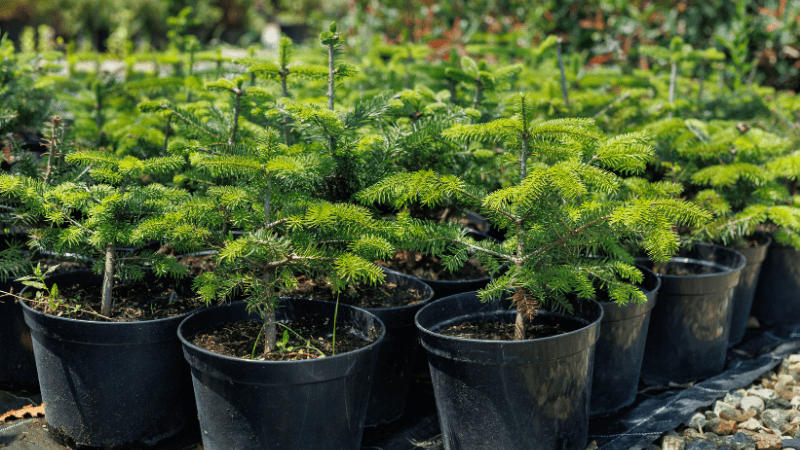
  • Bareroot Stock: These trees are sold without soil around their roots.
    • Pros: Extremely cost-effective and lightweight. They often have more intact root systems because they haven’t been “circularly” confined by a pot.
    • Cons: Highly sensitive. They must be planted while dormant (early spring) and the roots must never dry out.


  • Potted/Container-Grown: These are the most common at retail nurseries.
    • Pros: Easy to transport and can be planted throughout the growing season.
    • Cons: High risk of “pot-bound” roots. If a tree stays in a container too long, the roots begin to circle the pot, which can lead to girdling later in life.


  • Ball and Burlap (B&B): These are typically larger, more mature trees harvested with a soil ball wrapped in burlap and a wire basket.
    • Pros: You get an “instant” landscape with a more established tree.
    • Cons: These trees lose up to 90% of their feeder roots during harvest, leading to significant transplant shock. They require intensive watering for the first 2–3 years.


Nursery Stock


Select Hardy Species Developed for the Prairies

The Canadian Prairies are categorized as Zone 2, 3, or 4. If you buy a tree rated for Zone 5, it might look great in July, but it won’t see next May. Look for cultivars specifically bred for our “extreme” climate.

Arborist-recommended picks for Alberta, Saskatchewan, and Manitoba include:

  • Bur Oak: A slow-growing legend that is incredibly drought-tolerant and hardy.
  • American Elm (Disease-Resistant Cultivars): Look for ‘Brandon’ or ‘Valley Forge’ to ensure resistance to Dutch Elm Disease.
  • Discovery Japanese Elm: A hardy, beautiful alternative with great gold fall colour.
  • Honey Locust: Great for urban soils and provides dappled shade that won’t kill your grass.

 Avoiding Structural Defects at Purchase

Don’t just look at the height of the tree; look at its “bones.” When selecting nursery stock, avoid these three “red flags”:

  1. Codominant Stems: Look for a single, strong “central leader” (one main trunk going up). If the tree splits into a “V” shape, it is prone to splitting apart during heavy snow or high winds.
  2. Girdling Roots: Gently brush away the top inch of soil at the base of the trunk. If you see roots circling the trunk like a noose, put it back. These will eventually choke the tree as it grows.
  3. The “Lollipop” Look: Avoid trees that have been heavily “topped” or sheared into a ball at the nursery. This creates weak attachment points for future branches.

 Why Reputable Nurseries & Local Sourcing Matter

It is tempting to buy a “deal” at a big-box store, but local expertise is worth the investment. Reputable nurseries prioritize root health over top-growth aesthetics.

More importantly, local sourcing reduces transplant shock. A tree grown in a milder climate (like B.C. or Ontario) and shipped to the Prairies undergoes a massive “environment shock.” Locally grown nursery stock is already acclimated to our soil pH and our erratic temperature swings, giving it a much higher survival rate.


Expert Tip: The Root Flare

When you finally plant your chosen nursery stock, ensure the root flare (where the trunk widens at the base) is visible at the soil surface. Planting too deep is a leading cause of early tree death in urban yards.

Need help giving your new tree the best start? From professional planting to deep root fertilization, Green Drop’s arborists are here to help your landscape thrive.  Contact us for a quote!


“They did an amazing job leaving no mess.”

J. Smith, Edmonton

“He was friendly, courteous, and answered all my questions.”

Nick S, Edmonton

“Great service! They got it all done even though the tree needed a lot of work. Thanks again!”

Robert W, Edmonton

FAQs

Find answers to common questions about our tree care services and pricing packages.

Are your arborists local to each service area?

What are the costs of regular tree health care?

What areas does Green Drop provide emergency tree services?

What does your DED management program involve?

What services do you offer?

Still have questions?

Discover expert tips for maintaining healthy trees.