How to Care for Your Trees in the Intense Summer Heat
Summer in our part of the world is a welcome reprieve from the frigid temperatures...
READ MORE
Say hello to beautiful trees. Tell us your location to get the best tree care services for your area!

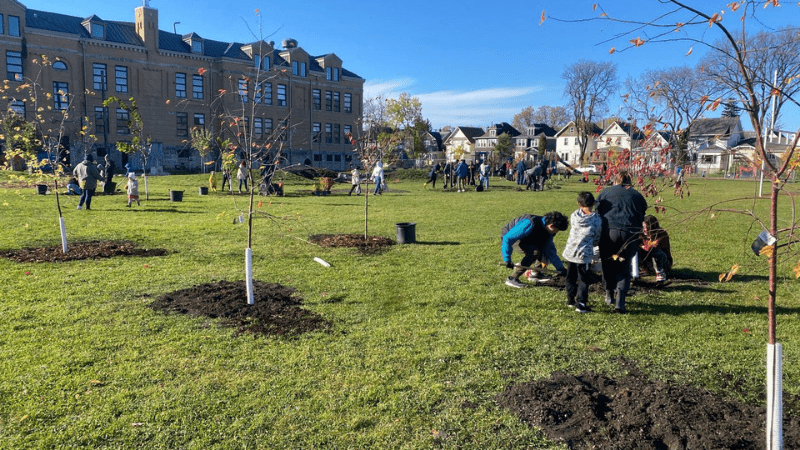
At Green Drop Trees, we often say that an arborist’s job doesn’t end when the last shovel of soil is turned. While our team of ISA-certified arborists brings the science, equipment, and heavy lifting to municipal and residential projects across Western Canada, there is one secret ingredient to a thriving canopy that isn’t found in a nursery: Community Engagement.
For a tree to grow from a vulnerable sapling into a majestic part of our skyline, it needs more than just a good root flare—it needs a neighborhood that cares. Here is a look at why resident involvement is the ultimate driver of Urban Forest Success.
When a city or developer plants a row of trees without engaging the local residents, those trees are often viewed as “city property” rather than “community assets.”
In our experience, when residents are involved in the planning process or simply informed about why a specific species was chosen for their street, the survival rate of those trees skyrockets. Community “buy-in” creates a sense of ownership. A resident who feels a tree belongs to their street is far more likely to keep an eye out for vandalism or accidental damage from lawn equipment. When a community values its canopy, the trees are protected by dozens of pairs of eyes every day.
Not all trees are created equal, especially in our harsh Prairie climates. Part of achieving Urban Forest Success is helping residents understand the “why” behind our selections.
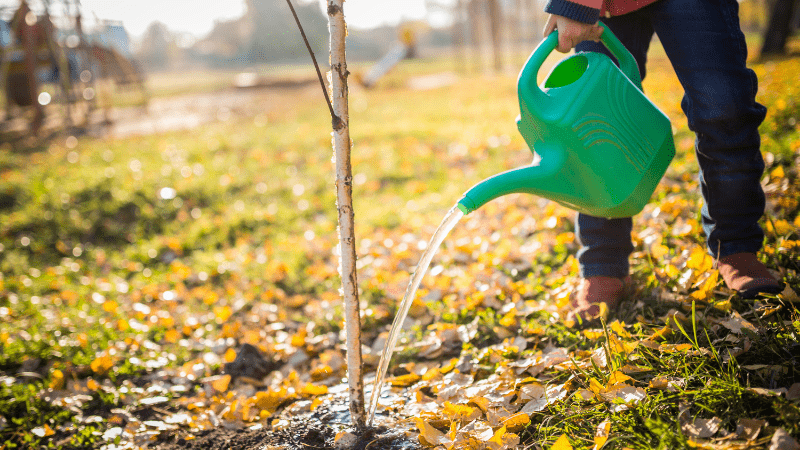
The first three years are the most critical for any new tree. While municipal water trucks do their best, they can’t be everywhere at once during a July heatwave in Edmonton or Calgary.
Urban Forest Success relies on a shared responsibility model. We encourage “Adopt-a-Tree” mindsets where the municipality handles the structural pruning and health assessments, while residents provide the supplemental deep watering that young root systems crave. A simple five-gallon bucket of water from a neighbor once a week can be the difference between a tree that thrives and one that fails.
How do we bridge the gap between arborists and the public? Green Drop is proud to lead the way through tangible community programs:
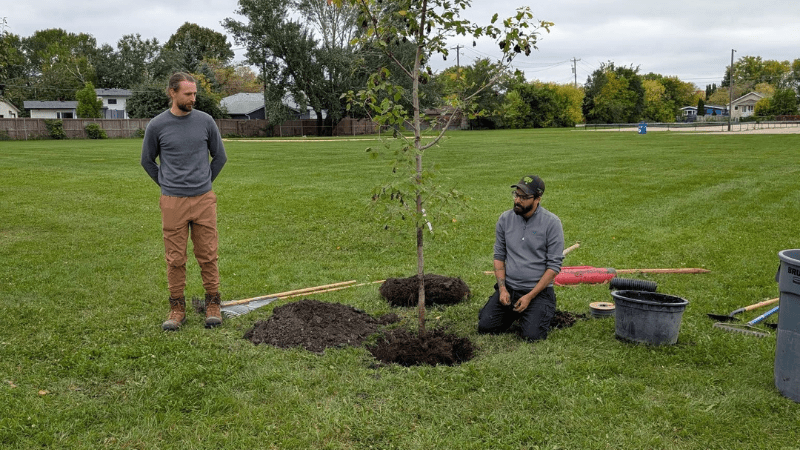
Proactive community engagement isn’t just a “feel-good” initiative—it’s a fiscal strategy. When residents help water and protect young trees, the mortality rate drops. This means cities spend less on “dead-and-removed” replacements and more on proactive care.
Furthermore, a community that knows how to spot a pest infestation early—like the tell-tale signs of a stressed canopy—allows arborists to intervene before a small problem becomes an expensive epidemic.
At the end of the day, an urban forest is a living infrastructure that belongs to everyone. By working together—arborists, city planners, and residents—we ensure that our “leafy lungs” remain strong, resilient, and beautiful.
Are you looking to boost the Urban Forest Success in your neighborhood? Connect with the Green Drop team today to learn more about our municipal and residential planting services.


