How to Care for Your Trees in the Intense Summer Heat
Summer in our part of the world is a welcome reprieve from the frigid temperatures...
READ MORE
Say hello to beautiful trees. Tell us your location to get the best tree care services for your area!

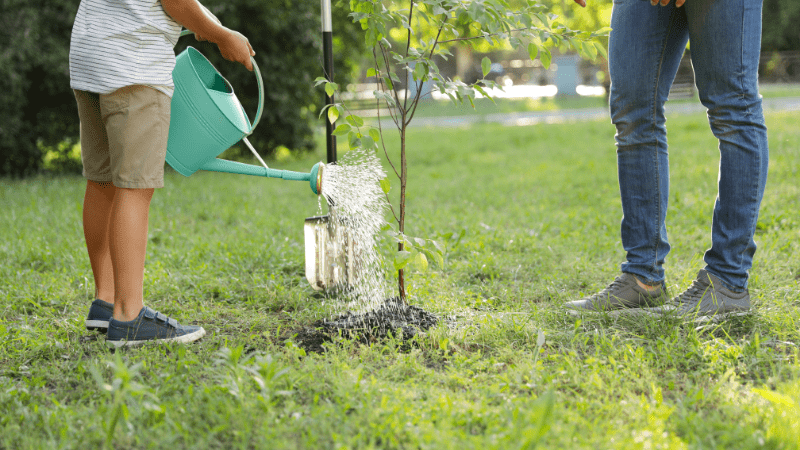
At Green Drop, we often say that the best time to plant a tree was twenty years ago, but the second-best time is today. However, planting a tree is only the first step. For a tree to grow from a fragile sapling into a majestic canopy provider, it needs a community to rally around it.
In the urban landscape, trees face challenges their forest-dwelling cousins never dream of: compacted soil, radiating heat from asphalt, and the occasional stray lawnmower. As arborists, we see firsthand how much a little neighborly love can change the trajectory of an urban forest.
If you want to help your city trees thrive this summer, here is your professional-grade guide to urban tree stewardship.
The first three years of a tree’s life in the city are the most critical. When a city or a homeowner plants a tree on a boulevard, that tree is essentially in “intensive care.” Its root system has been pruned for transport and must now fight to establish itself in often-poor soil.
Boulevards are often surrounded by concrete sidewalks and asphalt roads. These surfaces absorb thermal energy and radiate it back toward the tree, significantly increasing the rate of transpiration (how the tree “sweats”). Without supplemental water, a young city tree can reach a permanent wilting point in just a few days of 30°C+ weather.
To help city trees thrive, consistency beats quantity. Drowning a tree once a month is less effective than a steady “slow drip” approach.
| Tree Age | Frequency | Volume | Method |
|---|---|---|---|
| Year 1-2 | 2-3 times per week | 50-75 Liters | Slow-release watering bag (Gator) |
| Year 3-5 | Once a week | 100 Liters | Soaker hose or slow-running garden hose |
| Established | During droughts | 150 Liters | Deep root soak at the drip line |
Arborist Tip: Water in the early morning or late evening. This reduces evaporation and ensures the water reaches the roots rather than turning into steam on the soil surface.
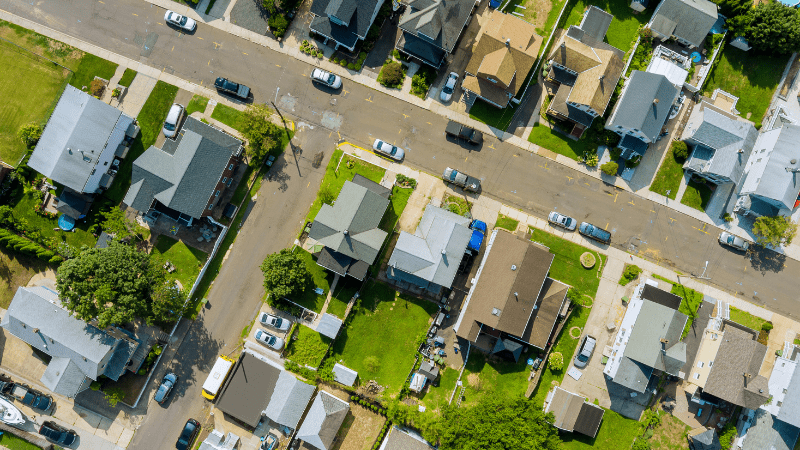
One of the most common misconceptions homeowners have is that a lush, green lawn is good for a tree. From an arborist’s perspective, grass is a tree’s primary competitor for resources.
Turfgrass is a greedy neighbor. Its dense, fibrous root system sits in the top few inches of soil—exactly where a young tree’s “feeder roots” are trying to grow. Grass will intercept almost all the nitrogen and water before it ever reaches the tree.
Mulch isn’t just for aesthetics; it’s a life-support system. A proper mulch ring:
The “Donut” Rule: When applying mulch, think donuts, not volcanoes. Never pile mulch against the trunk (the “root flare”). This traps moisture against the bark, leading to rot and fungal infections. Aim for a 2-4 inch layer of wood chips in a wide circle around the base.
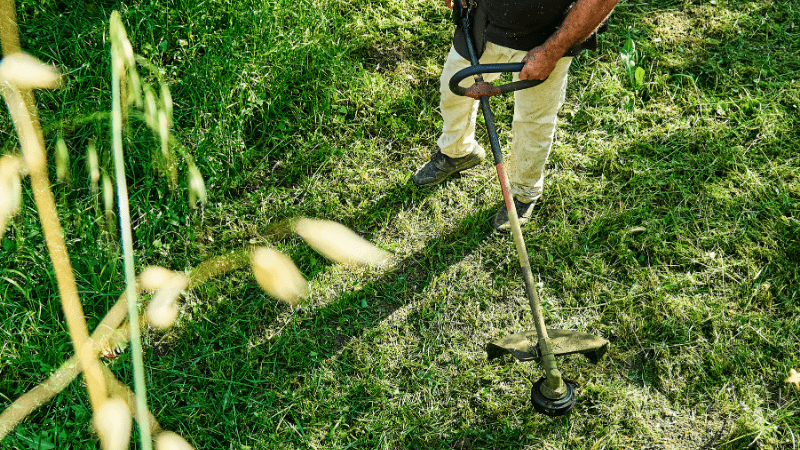
As an arborist, some of the saddest sights I see are “girdled” trees. This happens when lawnmowers or string trimmers (weed whackers) get too close to the trunk.
A tree’s bark isn’t just “skin”—it contains the vascular system (phloem) that transports food from the leaves to the roots. When a string trimmer nicks the bark, it’s like severing an artery. If the damage goes all the way around the circumference of the tree, the tree will starve to death, even if the leaves still look green for a season.
How to Protect Your Trees:
When a tree is stressed by summer heat, it sends out “chemical distress signals” that attract pests. To help your city trees thrive, you don’t need to be an entomologist, but you should be a keen observer.
Early detection is the difference between a simple treatment and a full tree removal. Keep an eye out for:
If you notice something unusual, don’t wait. Contact a certified arborist to diagnose the issue before it spreads to the rest of the street’s canopy.
The most important shift we can make as residents is how we view city trees. We often view the road, the streetlights, and the sewers as “infrastructure,” but we view the trees as “decorations.”
In reality, the urban forest is Green Infrastructure. It is a shared utility that provides:
Because city crews are often stretched thin, they cannot give every boulevard tree the individual attention it needs to truly flourish. When residents adopt the tree in front of their house—watering it, mulching it, and protecting it from mower blades—they aren’t just doing the city a favor; they are investing in their own health and property value.
To ensure your city trees thrive this season, follow this quick arborist-approved checklist:
At Green Drop, we believe that every tree deserves a chance to reach its full potential. While residents can provide the daily care, our team of ISA Certified Arborists is here for the heavy lifting—from structural pruning to advanced pest management and soil aeration.
Urban trees face an uphill battle, but with a stewardship mindset, we can ensure our “shared infrastructure” remains vibrant, cool, and green for generations to come.
Want to give your trees a professional boost? Contact Green Drop today for a consultation and let’s make your local canopy the envy of the neighborhood.


