How to Care for Your Trees in the Intense Summer Heat
Summer in our part of the world is a welcome reprieve from the frigid temperatures...
READ MORE
Say hello to beautiful trees. Tell us your location to get the best tree care services for your area!

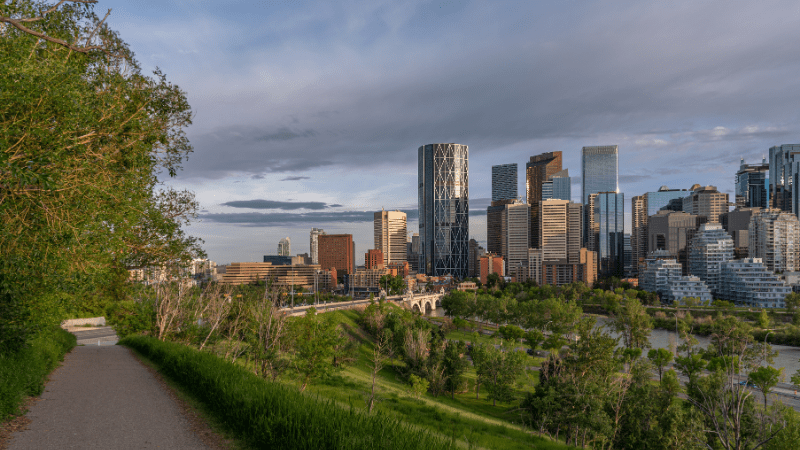
On the vast, windswept landscapes of the Canadian Prairies, a tree is more than just a piece of scenery—it is a lifeline. From the historic elms of Winnipeg to the burgeoning urban forests of Calgary and Regina, our “green umbrellas” protect us from the scorching summer sun and the biting winter winds.
As arborists, we often say that the best time to plant a tree was twenty years ago. The second best time is now. However, for many Prairie municipalities and neighborhood groups, the “now” often comes with a price tag that outpaces local budgets. This is where the surge in federal, provincial, and private grants is changing the game. By injecting vital capital into local forestry, these grants are allowing us to plant more trees than ever before, ensuring our “living infrastructure” remains resilient for generations to come.
One of the most significant shifts in modern arboriculture is the recognition of “canopy equity.” If you look at a heat map of any major Prairie city, you will often find that lower-income neighborhoods have significantly fewer trees than affluent ones. This isn’t just an aesthetic issue; it’s a public health concern.
Areas with low canopy cover experience the “Urban Heat Island” effect, where asphalt and concrete radiate heat, leading to higher cooling costs and increased heat-related illnesses. Grants specifically targeted at underserved communities are helping us bridge this gap. By focusing funding on these “gray” areas, we aren’t just planting trees; we are investing in health equity.
| Feature | Low Canopy Neighborhoods | High Canopy Neighborhoods |
|---|---|---|
| Avg. Summer Temp | 3–5°C Higher | Significantly Cooler |
| Energy Costs | Higher (AC usage) | Lower (Natural shade) |
| Air Quality | Higher particulate matter | Natural filtration |
| Mental Wellbeing | Lower access to nature | Higher reported satisfaction |
Through grant-funded initiatives, we are seeing schools and community centers in these areas transform from concrete heat traps into lush, shaded sanctuaries.
Many people ask us, “Why can’t the city just pay for it?” The reality is that municipal budgets are pulled in a thousand directions—roads, sewers, and emergency services often take precedence.
Grants act as a “force multiplier.” When a federal program like the 2 Billion Trees program offers matching funds, it allows a town to double its planting capacity without doubling its tax levy. This synergy allows municipal foresters to move beyond “reactive maintenance” (removing dead trees) and into “proactive expansion” (planting new ones).
Furthermore, grants often empower HOAs and small community groups. When a local gardening club secures a $5,000 environmental grant, they aren’t just buying saplings; they are hiring professional arborists to ensure the right species is planted in the right place, increasing the survival rate of the urban forest.
The beauty of current grant structures is their scalability. We are seeing these funds utilized across diverse landscapes:
Prairie winters are harsh, but Prairie summers can be relentless. Planting native species like Bur Oak or Hackberry around school perimeters provides a windbreak in January and a shaded classroom in June.
Homeowner associations are increasingly using grants to replace aging or diseased stands (such as those lost to Emerald Ash Borer or Dutch Elm Disease). This keeps property values high and neighborhood temperatures low.
Boulevards are the front lines of the urban forest. Grant funding allows for the implementation of structural soil and advanced irrigation systems that help trees thrive in the harsh environment between the sidewalk and the street.
Large-scale grants allow for “afforestation”—creating entirely new wooded areas on the outskirts of Prairie towns to act as carbon sinks and biodiversity hubs.
As arborists, we are constantly advocating for a shift in how we view trees. For too long, trees were seen as “amenities”—nice to have, but the first thing cut from a budget. Today, thanks to the data-driven requirements of many grant applications, we are successfully arguing that trees are infrastructure.
Just like pipes, wires, and pavement, trees provide essential services. However, unlike a road—which begins to depreciate the moment it is built—a tree is the only piece of infrastructure that appreciates in value over time.
Why Trees are “Green Infrastructure”:
By framing trees as infrastructure, municipalities can access “Green Bond” funding and long-term infrastructure grants that were previously reserved for bridges and highways.
The future of the Prairie urban forest is at a crossroads. Climate change is bringing more volatile weather—longer droughts followed by intense “pluvial” flooding. To survive, our communities must be resilient.
The influx of grant money is allowing us to diversify our “urban orchard.” Instead of planting monocultures (which are vulnerable to pests), we are using funds to source a wider variety of hardy species. We are moving toward a “10-20-30” rule: a forest should have no more than 10% of one species, 20% of one genus, and 30% of one family.
While large-scale grants do the heavy lifting, the success of the Prairie canopy starts in your backyard. Whether you are a member of a local council, a teacher at a school, or a homeowner, there are ways to tap into this green revolution.
At Green Drop, we’ve seen firsthand how a single grant-funded project can transform a dusty park into a thriving community hub. Our mission is to help you care for these investments. When we plant more trees today, we aren’t just changing the landscape; we are gifting a cooler, greener, and more resilient future to the next generation of Prairie dwellers.


