How to Care for Your Trees in the Intense Summer Heat
Summer in our part of the world is a welcome reprieve from the frigid temperatures...
READ MORE
Say hello to beautiful trees. Tell us your location to get the best tree care services for your area!

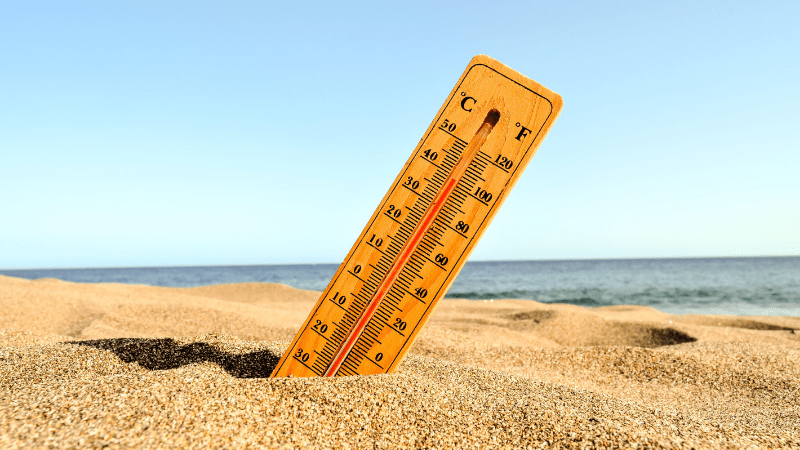
As the seasons shift across Western Canada—from the foothills of Calgary to the riverbanks of Winnipeg—our summers are bringing an increasingly familiar challenge: extreme heat. While we often retreat to the comfort of air conditioning, our residential and urban forests are left to battle the elements.
At Green Drop Trees, our ISA-certified arborists view trees not just as static landscape features, but as dynamic, living infrastructure. When heatwaves strike, they trigger complex biological shifts within a tree. Understanding how extreme temperatures impact your yard’s canopy is the first step toward keeping your landscape healthy, resilient, and thriving for decades to come.
To understand the impact of heatwaves, we have to look closely at basic plant biology. Trees rely on a process called photosynthesis to create energy. However, when ambient temperatures spike past 30°C, a tree’s physiological systems begin to stall.
Just like humans sweat to stay cool, trees utilize a process called transpiration. They release water vapor through microscopic pores in their leaves known as stomata.
When a severe heatwave lingers, a tree faces a difficult choice. If it keeps its stomata open to cool down, it risks losing too much moisture and drying out. If it closes its stomata to conserve water, it shuts down photosynthesis entirely, starving itself of vital nutrients. When this occurs, the internal temperature of the leaf spikes, leading to cellular damage, scorched leaf margins, and premature leaf drop.
During prolonged heatwaves, the atmospheric demand for moisture skyrockets, causing a dramatic spike in soil evaporation and tree transpiration. This leaves trees facing severe water deficits.
When soil dries out completely, the water columns inside the tree’s vascular system (the xylem) undergo immense tension. In severe cases, this tension can cause “embolisms”—essentially, air bubbles that block water transport from the roots to the canopy.
While rural trees face substantial stress during summer spikes, city trees bear an even heavier burden due to the urban heat island effect. Built environments are dense with asphalt, concrete, brick, and steel—materials that act like giant thermal sponges, absorbing solar radiation during the day and radiating that heat back into the surrounding air at night.
Because of this effect, urban centers like Edmonton, Calgary, Saskatoon, and Winnipeg can experience ambient temperatures that run 5°C to 12°C hotter than surrounding rural landscapes.
For a city tree, there is no overnight relief. High nighttime temperatures prevent the tree from entering its natural recovery phase, forcing it to expend energy through cellular respiration around the clock. Coupled with compacted urban soils that resist water absorption and restricted root zones beneath sidewalks, urban trees are uniquely vulnerable when intense heatwaves stall over our provinces.
The good news is that we are not entirely powerless against shifting summer weather patterns. Homeowners can deploy several practical, arborist-backed strategies to safeguard their trees before and during severe heatwaves.
Forget daily, shallow sprinklers. To help a tree survive intense heat, you need to deliver water deep into the root zone—roughly 30 to 45 centimeters below the surface, where the active feeder roots live.
Mulch is your tree’s single best shield against soil moisture loss. Apply a 5-to-10-centimeter layer of organic wood chips around the base of the tree, extending out to the drip line. This layer acts as an insulating blanket, cooling the soil temperatures by several degrees and slowing evaporation.
When a tree is fighting a heatwave, it needs every green leaf it has to generate energy and regulate its internal temperature. Avoid heavy structural pruning or unnecessary limb removal during the dead of summer, as pruning wounds add extra stress and open up inner canopy branches to sunscald.
A single heatwave rarely kills a mature, established tree outright. The true danger lies in the cumulative, long-term impacts of repeated heat stress year after year.
When a tree spends weeks or months in a defensive survival mode, it depletes its stored carbohydrate reserves. This chronic energy deficiency leaves the tree structurally weakened and significantly compromises its natural immune system.
Over multiple seasons, a heat-stressed tree becomes highly susceptible to secondary pests and opportunistic diseases. For instance, boring insects and fungal pathogens are uniquely adept at targeting trees that have been compromised by successive heatwaves. What looks like a sudden pest infestation is often the final chapter of a story that started with environmental heat stress years prior.
Protecting our urban forest takes foresight, data, and proactive management. At Green Drop Trees, our team features Western Canada’s largest roster of ISA-certified arborists. We don’t just treat the symptoms of heat damage; we work from the ground up to build long-term landscape resilience.
Whether your yard needs a professional soil nutrition boost to strengthen root networks, targeted pest management, or a comprehensive health assessment, we tailor our solutions directly to your space and local climate.
Don’t wait for the next major temperature spike to think about your canopy. Connect with Green Drop Trees today for a professional consultation, and let’s ensure your trees stay healthy, beautiful, and vibrant all summer long.


