How to Care for Your Trees in the Intense Summer Heat
Summer in our part of the world is a welcome reprieve from the frigid temperatures...
READ MORE
Say hello to beautiful trees. Tell us your location to get the best tree care services for your area!

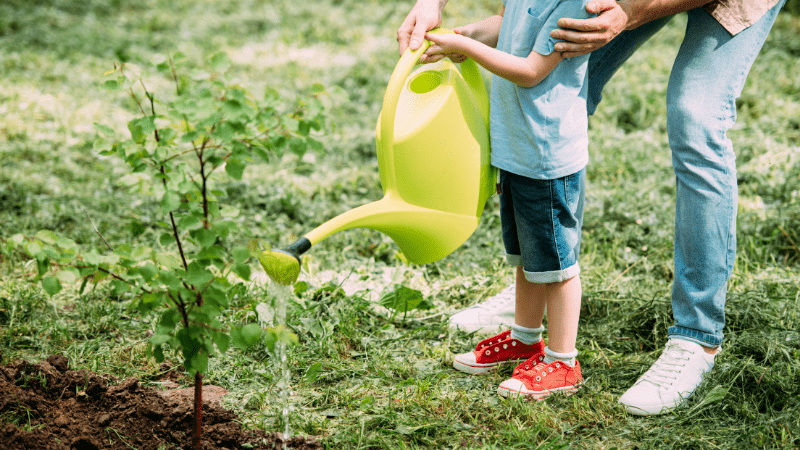
As the summer heat intensifies and dry spells stretch across Western Canada, our urban forests face a quiet but serious threat: drought stress. Whether you live in Calgary, Edmonton, Saskatoon, Regina, or Winnipeg, our Prairie climates are no strangers to unpredictable weather and long periods without rain.
When drought conditions take hold, your landscape needs your help. However, simply turning on the sprinkler for a few minutes isn’t enough to keep your mature or newly planted trees alive. To ensure your canopy survives the heat, you must learn how to water trees properly.
As ISA-certified arborists, we see firsthand the long-term damage that improper hydration causes. Here is our science-backed, professional guide on how to manage drought conditions and keep your trees thriving.
The biggest mistake homeowners make during a dry spell is giving their trees a daily, light sprinkle. This frequent shallow watering does more harm than good. It encourages the tree to grow a weak, shallow root system right at the soil surface, leaving it incredibly vulnerable to heat waves and shifting soil conditions.
To truly protect your investment, you must practice deep watering.
Deep watering means applying water slowly so it penetrates 12 to 18 inches below the surface, right where the tree’s critical absorbing roots live. Deep watering teaches the roots to grow downward, making the tree far more resilient to drought conditions.
The Arborist Technique: Use a soaker hose or set your garden hose to a slow trickle, placing it within the “drip line” (the area directly beneath the outer circumference of the tree’s branches). Let it run for a prolonged period so the moisture can fully saturate the deep root zone.
When it comes to hydration, a one-size-fits-all approach doesn’t work. To water trees properly, you must adjust the volume based on the maturity and size of the tree.
As a general rule of thumb, trees require 35 to 40 litres of water per week for every 2.5 centimetres (1 inch) of trunk diameter.
Here is how that translates to your yard:
Tip: If you’re unsure of your soil’s moisture levels, our teams use advanced soil sensors to track underground hydration precisely. At home, you can use a long screwdriver—if it passes easily into the soil up to 6 inches, your ground has decent moisture.
Timing is everything. If you water your trees during the blazing heat of the afternoon, you lose a massive percentage of that moisture to immediate evaporation. Furthermore, water droplets left on leaves in midday sun can cause foliage scorch.
The Golden Window: The absolute best time to water your trees is early morning (before 8:00 AM) or late evening (after 7:00 PM).
Watering during these cooler hours allows the water to seep deep into the soil without battling the sun. It gives the root system plenty of time to absorb the moisture before the heat of the next day sets in.
If water is the medicine, mulch is the shield. Applying organic mulch around your trees is one of the most effective, eco-friendly ways to combat drought stress.
A proper layer of mulch acts as a natural insulation blanket. It provides several key benefits:
How to Mulch Like a Pro: Create a “donut” of wood chips or bark mulch that is 5 to 10 centimetres (2 to 4 inches) deep around the base of the tree, extending out to the drip line. Crucial rule: Never stack mulch against the tree trunk (known as “volcano mulching”). Leave a 5-centimetre gap around the bark to prevent rot and pest infestations.
Even with the best intentions, it is easy to make mistakes that compromise tree health. Watch out for these common pitfalls:
Caring for our urban forest amidst fluctuating weather patterns is a challenge we live for. If you notice signs of drought stress—such as wilting leaves, early yellowing, or canopy thinning—proactive care is essential.
From deep root fertilization to custom health assessments, the ISA-certified arborists at Green Drop are here to help your yard thrive in every season.
Book your free tree health assessment with Green Drop today!


