How to Care for Your Trees in the Intense Summer Heat
Summer in our part of the world is a welcome reprieve from the frigid temperatures...
READ MORE
Say hello to beautiful trees. Tell us your location to get the best tree care services for your area!

As the vibrant summer season sweeps across the Canadian Prairies—from the foothills of Calgary and Edmonton down through Saskatoon, Regina, and Winnipeg—our urban forests come alive. Trees provide the vital shade, cooling evapotranspiration, and beauty that make our neighborhoods feel like home.
However, summer also brings out a less welcome crowd. Warm weather accelerates the lifecycles of destructive tree pests, threatening the health of your yard’s silent anchors.
At Green Drop, our ISA-certified arborists see firsthand how quickly a minor bug problem can spiral into a structural emergency. If you want to protect your property and ensure your landscape thrives year after year, understanding the unique challenges of Prairie tree pests is essential.
Here is our expert guide to identifying, preventing, and treating the most common summer invaders before they cause lasting damage.
The Prairie climate is notorious for its extreme shifts, and the insects that thrive here are highly resilient. In the summer months, our arborists primarily battle four major categories of tree pests:
These tiny, soft-bodied insects cluster on the undersides of leaves, using piercing mouthparts to suck out vital plant juices. While a few aphids won’t kill a mature tree, massive colonies can cause leaves to curl, stunt new growth, and weaken the tree’s overall immune system.
Thriving in hot, dry Prairie spells, spider mites are microscopic arachnids that sap the life from your foliage. They are especially devastating to evergreens, such as our beloved spruce trees, causing needles to rust and drop prematurely.
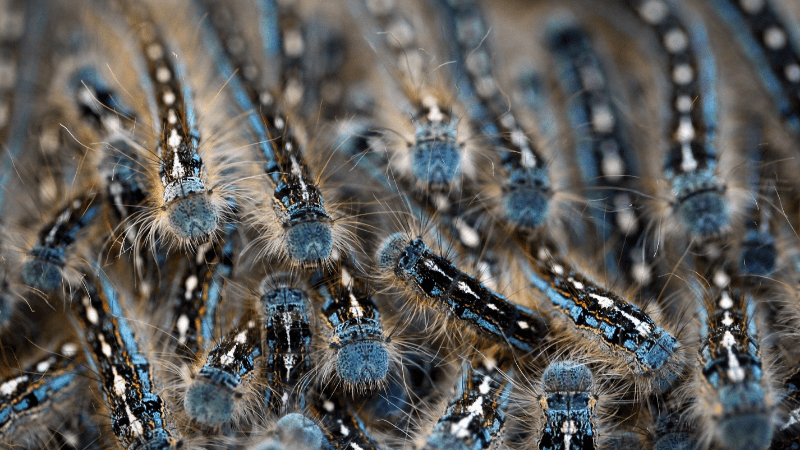
From Forest Tent Caterpillars to Cankerworms, these voracious eaters can strip a mature canopy in a matter of weeks. While a healthy tree can usually survive a single defoliation event, consecutive years of caterpillar infestations leave trees highly vulnerable to secondary diseases.
Borers are the most dangerous tree pests because they do their damage out of sight. Species like the Bronze Birch Borer and the highly invasive Emerald Ash Borer burrow beneath the bark to feed on the vascular system, effectively cutting off the tree’s water and nutrient supply from the inside out.
You don’t need a degree in urban forestry to spot the early warning signs of tree pests. Catching an infestation before it takes over your canopy can save you thousands of dollars in tree removal or intensive treatments. Walk your yard weekly and look for these red flags:
When it comes to managing tree pests, the calendar is everything. Treating a tree at the wrong time isn’t just a waste of resources—it can also completely miss the target insect’s most vulnerable life stage.
For example, spraying for caterpillars after they’ve already spun cocoons is useless. Similarly, soil or trunk injections designed to stop borers must be applied when the tree is actively transpiring (drawing up water) in the late spring or early summer, allowing the treatment to spread throughout the canopy.
Our arborists utilize science-backed life-cycle tracking to strike exactly when the target tree pests are most susceptible, maximizing treatment success while minimizing the impact on beneficial pollinators.
Many homeowners only call an arborist when a tree looks visibly dying. This is reactive care, and it often means playing catch-up against an advanced infestation. At Green Drop, we advocate for a preventative approach rooted in modern plant health care.
| Proactive Care (Preventative) | Reactive Care (Treatment) |
|---|---|
| Focus: Building the tree’s natural defense systems. | Focus: Eradicating an active, damaging population. |
| Methods: Deep-root fertilization (like RootBoost), proper watering, and strategic pruning. | Methods: Target micro-injections, eco-friendly contact sprays, or systemic applications. |
| Cost: Affordable, predictable maintenance. | Cost: Expensive emergency interventions or potential tree removal. |
| Outcome: A resilient tree that can naturally withstand minor pest pressures. | Outcome: Stress mitigation; success depends on how much damage has already occurred. |
A tree stressed by Prairie drought, poor soil, or mechanical damage releases chemical distress signals that actively attract tree pests. By investing in preventative health care, you eliminate those triggers entirely.
While a blast of water from a garden hose can temporarily dislodge a mild aphid population on a small shrub, major infestations require professional intervention.
You should reach out to Western Canada’s largest team of ISA-certified arborists if:
Your yard has its own unique personality, and your trees do too. Don’t let summer tree pests compromise the health, safety, and value of your property. Our team uses state-of-the-art diagnostics and eco-friendly practices that are tough on pests but easy on the planet.
Whether you need a proactive health plan or an expert assessment of a struggling tree, Green Drop is rooted in your community. Contact Green Drop today for a free, no-obligation estimate and keep your trees thriving all summer long!


