How to Care for Your Trees in the Intense Summer Heat
Summer in our part of the world is a welcome reprieve from the frigid temperatures...
READ MORE
Say hello to beautiful trees. Tell us your location to get the best tree care services for your area!

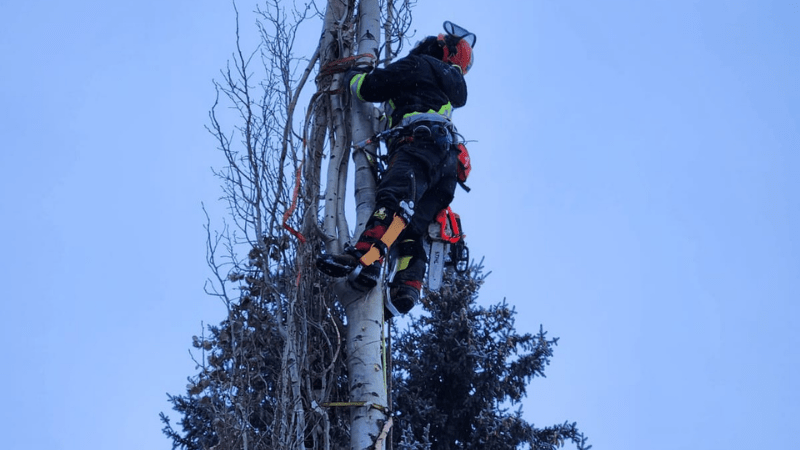
At Green Drop Trees, we don’t just see trees as landscaping features; we see them as living infrastructure. Just as you wouldn’t hire a general handyman to perform surgery or design a skyscraper’s foundation, your trees—some of the most valuable assets on your property—require specialized, science-based care.
When homeowners or property managers search for a certified arborist, they are often looking for someone to prune a branch or remove a stump. However, the true value of professional arboriculture lies in the intersection of biological science, advanced risk assessment, and long-term strategic planning.
In this guide, we’ll explore why hiring a professional with International Society of Arboriculture (ISA) credentials and Tree Risk Assessment Qualification (TRAQ) is the best investment you can make for your property’s safety and value.
To the untrained eye, tree care looks like manual labor. To a certified arborist, it is a complex equation involving plant physiology, soil science, and physics.
Trees are dynamic organisms. Every cut made during pruning triggers a biological response. A certified arborist understands “compartmentalization”—the way a tree seals off wounds to prevent decay. Improper “topping” or lion-tailing (removing too many inner branches) can permanently stress a tree, leading to starvation or structural failure.
We don’t guess; we assess. By evaluating the lean of a tree, the presence of fungal fruiting bodies (mushrooms at the base), and the integrity of the root flare, we can predict potential failures before they happen.
A tree planted today is a legacy for fifty years from now. Arboriculture involves choosing the right species for the right location (Right Tree, Right Place) and structural pruning while the tree is young to prevent expensive, hazardous issues in the future.
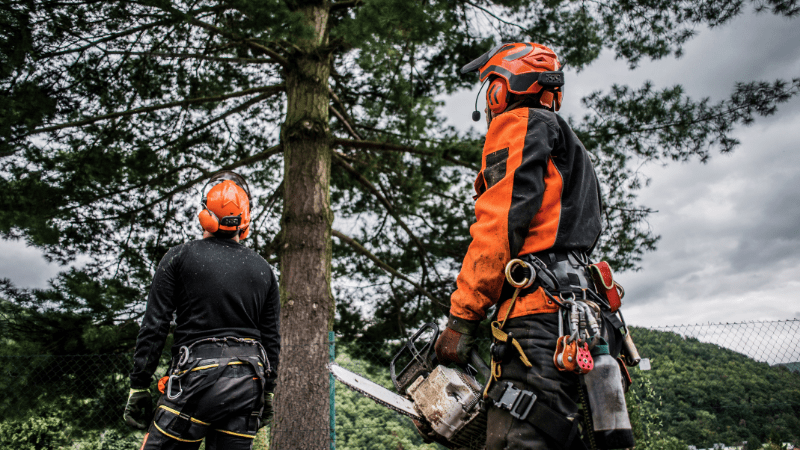
One of the most critical distinctions in our field is the TRAQ (Tree Risk Assessment Qualification). While many may claim to be “tree experts,” a TRAQ-qualified arborist has undergone specialized training to provide a standardized, systematic process for assessing tree risk.
The TRAQ program provides a framework for identifying tree risk and proposing mitigation measures. It focuses on the relationship between:
For municipal managers and commercial property owners, TRAQ assessments are vital for protecting infrastructure. By identifying “High Risk” trees and addressing them proactively, we prevent the catastrophic costs associated with storm damage and emergency removals.
The “Certified” in certified arborist isn’t just a badge; it’s a promise of current knowledge. The International Society of Arboriculture (ISA) requires applicants to have years of full-time experience and pass a rigorous exam covering everything from nutrition and fertilization to installation and establishment.
The field of arboriculture is constantly evolving. New pests (like the Emerald Ash Borer) and new techniques in soil aeration or cable bracing emerge every year. To maintain their status, a certified arborist must earn Continuing Education Units (CEUs). This ensures that when we step onto your property, we are bringing the most modern, eco-friendly, and effective solutions available.
| Feature | Certified Arborist (ISA) | Uncertified “Tree Cutter” |
|---|---|---|
| Education | Required (Exam & Experience) | None Required |
| Continuing Ed | 30 continued learning credits every 3 years | None |
| Safety Training | ANSI Z133 Standards | Variable/None |
| Approach | Science-Based Preservation | Removal-Focused |
| Insurance | Professional & Liability | Often Missing or Minimal |
Tree work is inherently dangerous. It consistently ranks as one of the most high-risk professions in North America. When you hire an uncertified crew, you are taking on an immense financial and legal burden.
A certified arborist operates under ANSI Z133 safety standards. This includes the use of specialized personal protective equipment (PPE), rigorous rigging protocols, and clear communication on the job site.
Green Drop Trees carries comprehensive liability insurance and workers’ compensation. If an accident occurs on your property involving an uninsured “tree guy,” the homeowner can be held liable for medical bills and lost wages. Hiring a certified professional ensures that the liability stays with the contractor, not the customer.
From a municipal perspective, trees are part of the “urban forest.” When a city or a Homeowners Association (HOA) fails to maintain its canopy through professional assessments, they open themselves up to “duty of care” lawsuits.
By hiring a certified arborist to perform regular inspections, municipalities and homeowners create a “paper trail” of due diligence. If a storm causes a tree to fall, having a recent TRAQ report showing the tree was previously deemed “Low Risk” can be a powerful defense against claims of negligence.
Proactive structural pruning reduces “wind sail” effect and balances the weight of the canopy. This significantly lowers the probability of “catastrophic failure”—the kind of event that brings down fences, roofs, and power lines.
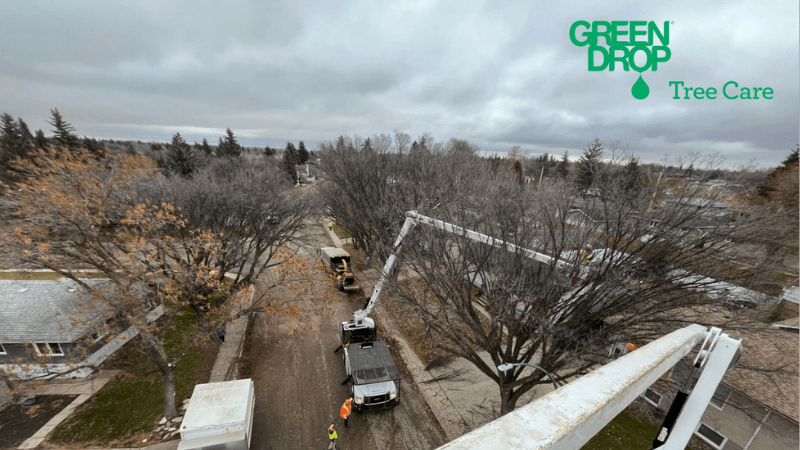
The ultimate goal of working with a certified arborist is the health of the canopy. A healthy urban forest reduces energy costs (via shade), increases property values (often by 10-20%), and improves mental well-being.
Many “tree loppers” will cut a tree to make it look “neat” in the short term, but these cuts often lead to a flush of weak “sucker” growth that makes the tree more dangerous and uglier within two years. A certified professional prunes for the tree’s natural form, ensuring it stays beautiful and structurally sound for decades.
Often, the problem isn’t in the branches—it’s in the dirt. We use tools like AirSpades to decompact soil and apply specialized fertilizers based on the specific needs of your species. This holistic approach ensures your “Green Drop” is a healthy one.
Your trees are the only assets on your property that actually increase in value over time—but only if they are healthy.
Investing in a certified arborist and TRAQ assessments is an investment in safety, legal protection, and environmental beauty. At Green Drop Trees, we bring the science of arboriculture to your backyard, ensuring that your canopy remains a source of joy rather than a source of stress.
Are you concerned about a leaning tree or overgrown branches? Contact Green Drop Trees today to schedule a consultation with a certified arborist. Let’s build a long-term plan for your property together.


